After more than a decade working with smallholder farmers across Zambia, Good Nature Agro had accumulated something many growing businesses wish they had.
Data.
Lots of it.
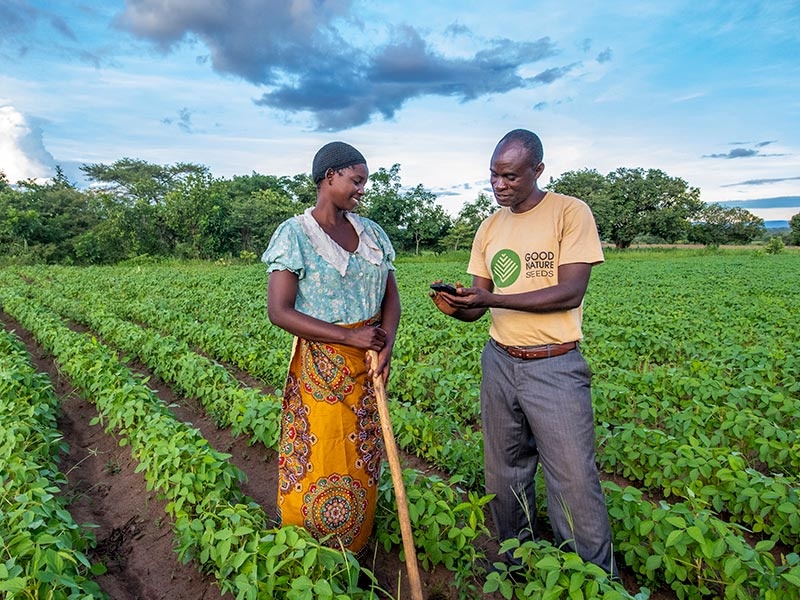
The company works with more than 20,000 farmers growing soybeans, groundnuts, beans, cowpeas, and other legumes. Through its outgrower model, farmers receive certified seeds, technical assistance, access to demonstration plots, and a reliable market for their harvests. Over the years, that work generated a wealth of information—farmer profiles, production histories, growing conditions, yields, and records of the support farmers received season after season.
Yet one question continued to nag at the team.
What was the data trying to tell them?
Good Nature Agro had spent years building relationships with thousands of farmers. Some became highly productive, long-term participants in the company’s outgrower network. Others struggled, dropped out, or sold their harvests elsewhere.
The company knew there were patterns hidden in the data. What it didn’t have was the time or resources to fully explore them.
That challenge eventually made its way to Miller Center’s Data Analytics Showdown, a data hackathon that pairs entrepreneurs with Santa Clara University graduate students to turn real business challenges into actionable insights.
A Different Kind of Post-Accelerator Support
Good Nature Agro first joined the Miller Center accelerator in 2018. Nearly a decade and several Miller Center programs later, the company returned with a new challenge—one hidden inside years of farmer data.
That ongoing relationship reflects a core belief at Miller Center: entrepreneur support does not end at graduation. Through its growing Entrepreneur Network and ongoing programs, Miller Center continues to connect entrepreneurs with peer learning, mentors, investors, university resources, and specialized opportunities long after they complete our accelerator.
The Data Analytics Showdown is one example of that commitment in action.
Each quarter, Miller Center invites entrepreneurs from its global network to submit real business challenges tied to data they are struggling to analyze or fully understand. Selected entrepreneurs are then paired with graduate students through a partnership between Miller Center and Leavey School of Business’ Department of Information Systems and Analytics at Santa Clara University.
The collaboration brings together two valuable assets: entrepreneurs with real-world business challenges and students with advanced training in data analytics, business intelligence, information systems, and emerging AI-enabled analytical tools.
The concept is simple.
Many social enterprises collect extensive operational and impact data. Few have the time, budget, or specialized analytical expertise to fully explore it.
The showdown creates space for that exploration.
One Challenge, Many Solutions
What makes the model unique is that entrepreneurs don’t receive a single consulting team.
Instead, multiple student teams receive the same dataset and the same challenge.
Over several weeks, students engage directly with the entrepreneur, learn about the business, analyze the data, and develop recommendations. At the end of the process, they present their findings in a pitch-style competition judged by Leavey School faculty and Miller Center mentors with expertise in data analytics, artificial intelligence, and business strategy — in this case, showdown faculty advisor, Professor Tao Li, and mentors PK Krishnamurthy and Sunil Samel.
For entrepreneurs, the value isn’t just the final presentation.
It’s seeing multiple ways of thinking about the same problem.
One team may identify operational patterns. Another may focus on customer behavior. Another may uncover risks or opportunities hidden in the data.
The result is often a richer set of insights than a traditional consulting project would provide.
For students, the experience offers something equally valuable: the opportunity to work on a challenge with real-world consequences rather than a hypothetical case study.
Searching for Patterns
For Good Nature Agro, the challenge centered on understanding farmer performance, retention, and loyalty.
The company wanted to better understand the factors influencing farmer productivity, participation in the outgrower scheme, and the likelihood that farmers would continue selling their harvests through the Good Nature Agro network.
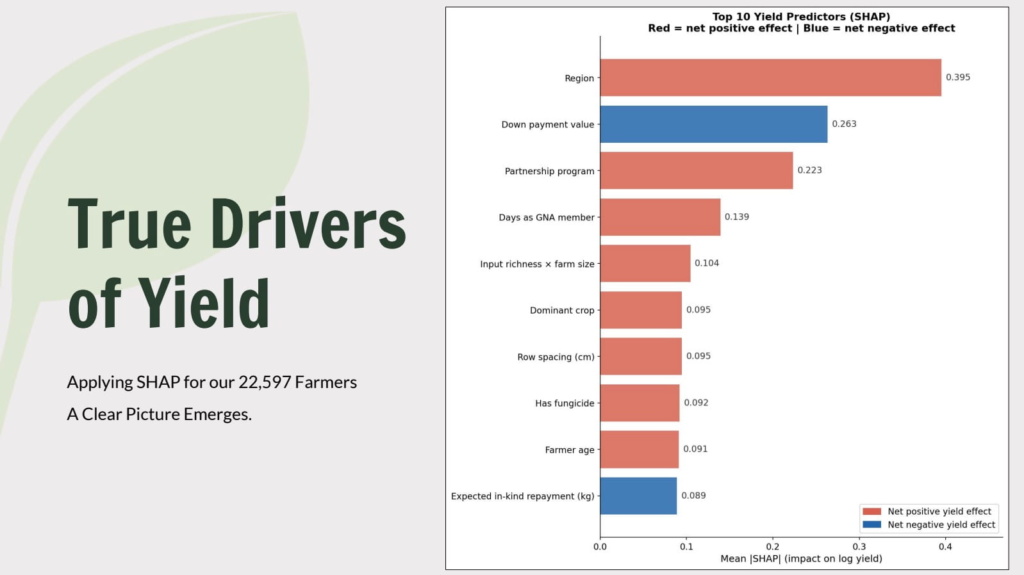
Student teams were given access to years of farmer data collected by field agents and extension staff working across Zambia. The dataset included information from more than 22,000 farmers, covering geography, farm characteristics, production history, loan packages, technical assistance, planting surveys, and buy-back records collected over multiple growing seasons.
What students were analyzing was not a classroom exercise.
It was a decade of operational learning generated through relationships with thousands of smallholder farmers.
As teams dug into the data, different approaches began to emerge. Some focused on broad patterns. Others explored specific variables or farmer segments. Each team brought a different lens to the challenge.
And that diversity of thinking was exactly the point.
From Data to Decisions
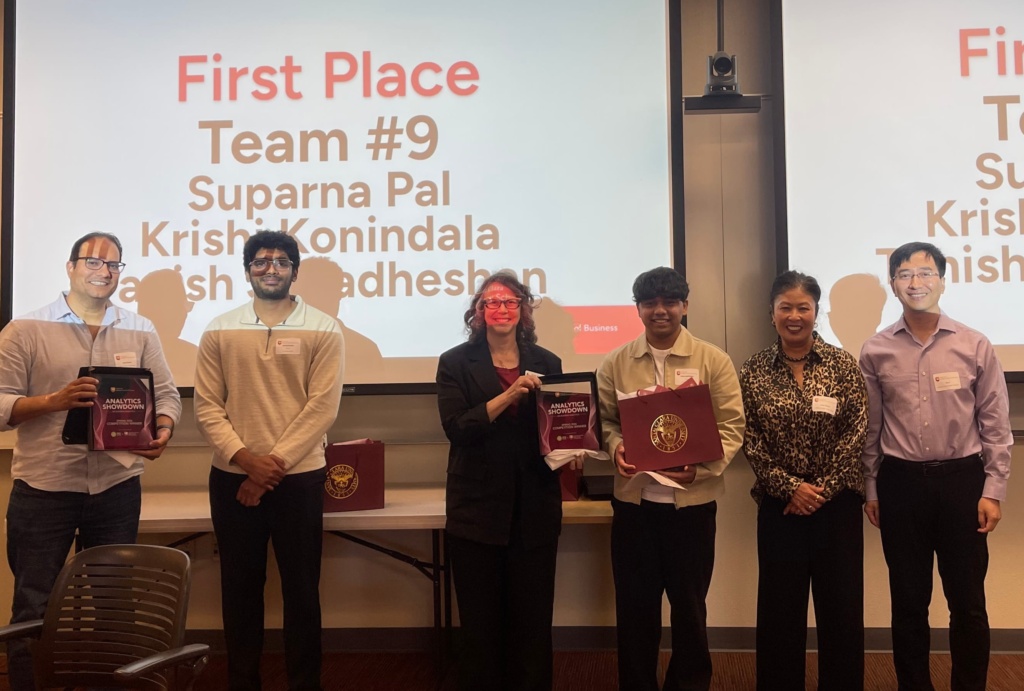
The winning team — graduate students Tanish Jagadheshan, Krishi Konindala, and Suparna Pal — took the analysis a step further.
Using machine learning and predictive analytics, the team developed a multi-stage model that could estimate expected farmer yields, identify factors associated with farmer retention and sell-back behavior, and help Good Nature Agro flag high-risk farmers earlier in the season.
One finding stood out.
Not all farmers appeared to need the same level of support.
The analysis revealed that the highest dropout rates occurred during a farmer’s first season in the program. Farmers who successfully navigated those early years became dramatically more likely to remain loyal participants and significantly more productive over time.
Newer participants often faced different challenges than long-standing members of the program. Certain forms of engagement seemed especially important during the first years of participation, when farmers were still building trust and familiarity with the outgrower model.
The team also discovered that risk could be identified remarkably early. Using information already collected during loan registration, their model was able to identify many of the farmers most likely to disengage from the program before the growing season had even begun.
Then the team did something unexpected.
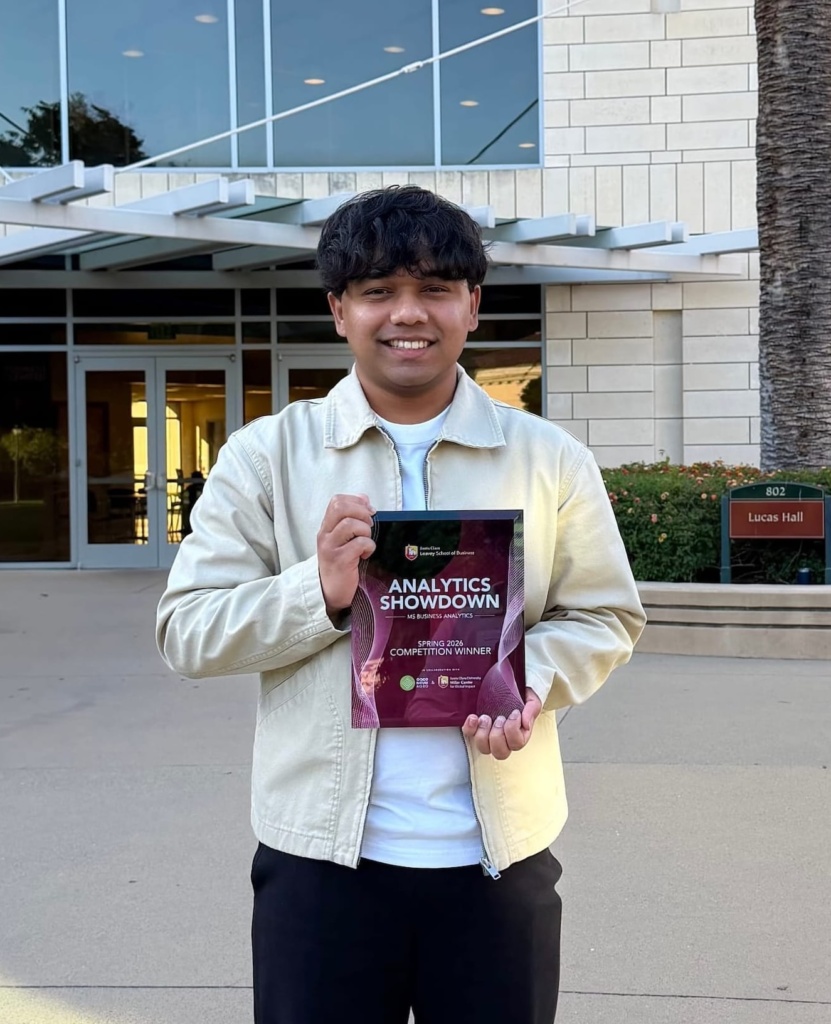
As Tanish explained, their goal was to ensure the analysis was not simply an academic exercise. “Analysis is only as good as what it enables,” he reflected. Rather than stopping with insights and recommendations, the team focused on building a practical tool that Good Nature Agro could potentially use in future seasons.
The result was a live Farmer Risk Assessment application.
The application allows field teams to enter farmer information and assess risk in real time, helping identify which farmers may benefit from additional support before problems emerge.
In short, the students didn’t just analyze the data.
They created something the company is now exploring for future use.
“The winning team provided insightful perspectives and uncovered patterns that challenged some of our existing assumptions. Their analysis highlighted opportunities we may not have explored internally due to our close proximity to day-to-day operations. Their work on predictive modeling, input effectiveness, and early risk identification was highly relevant to our business needs.”
—Chebwa Chesho Chitobolo, Business Intelligence Manager, Good Nature Agro
Chebwa also noted that the experience demonstrated the value of bringing together industry and academia, creating a platform where students could apply analytical and problem-solving skills to real business challenges while organizations gained access to fresh perspectives and emerging talent.
Good Nature Agro is now exploring how elements of the recommendations and application could be incorporated into future growing seasons.
For the company, what began as a question about farmer performance and loyalty evolved into a practical management tool.
The University Advantage
The most interesting part of this story isn’t the tool itself.
It’s what the tool represents.
A social enterprise in Zambia brought a real business challenge to the table.
Graduate students from Santa Clara University’s Leavey School of Business brought analytical skills, curiosity, and fresh perspectives.
Together, they uncovered insights that neither might have reached alone.
For students, the experience offered an opportunity to apply classroom learning to a challenge affecting thousands of farming households.
For entrepreneurs, it provided access to analytical talent and new ways of looking at a problem that may have been sitting unresolved inside their business for years.
And for Miller Center, it offered a powerful example of what post-accelerator support can look like.
“These graduate students demonstrate that data is more than numbers. They uncover the stories hidden within the data, transforming complex information into actionable insights that empower social enterprises to make better decisions and amplify their impact.”
— Linda Gentry, Sr. Manager of Campus Engagement, Miller Center for Global Impact
As the showdown enters its fourth year, interest continues to grow among entrepreneurs across Miller Center’s global network. Many are discovering that some of the most valuable support comes not from another workshop or webinar, but from finding new ways to look at an old problem.
Good Nature Agro brought a decade of data and a difficult question.
The Data Analytics Showdown helped turn that question into a new set of possibilities.
That is the university advantage.
___________
Photos:
Good Nature Agro
Final Data Presentation for Good Nature Agro
Data Analytics Showdown Winning Team
Tanish Jagadheshan SCU Graduate Student