Witnessing the Valley of Death in India’s Social Enterprise Ecosystem
“Happiness is when what you think, what you say, and what you do are in harmony.”
— Mahatma Gandhi
I come back to this quote often, especially when I’m traveling. It captures how I feel about my work when I’m meeting social entrepreneurs and partners on the ground, when the ideas we talk about in boardrooms are tested against lived reality. My recent trip to India was one of those moments of alignment. What I saw, heard, and felt there strongly reaffirmed something we have been naming for years — the “valley of death” for social enterprises is real, it is widening, and addressing it has never been more urgent.
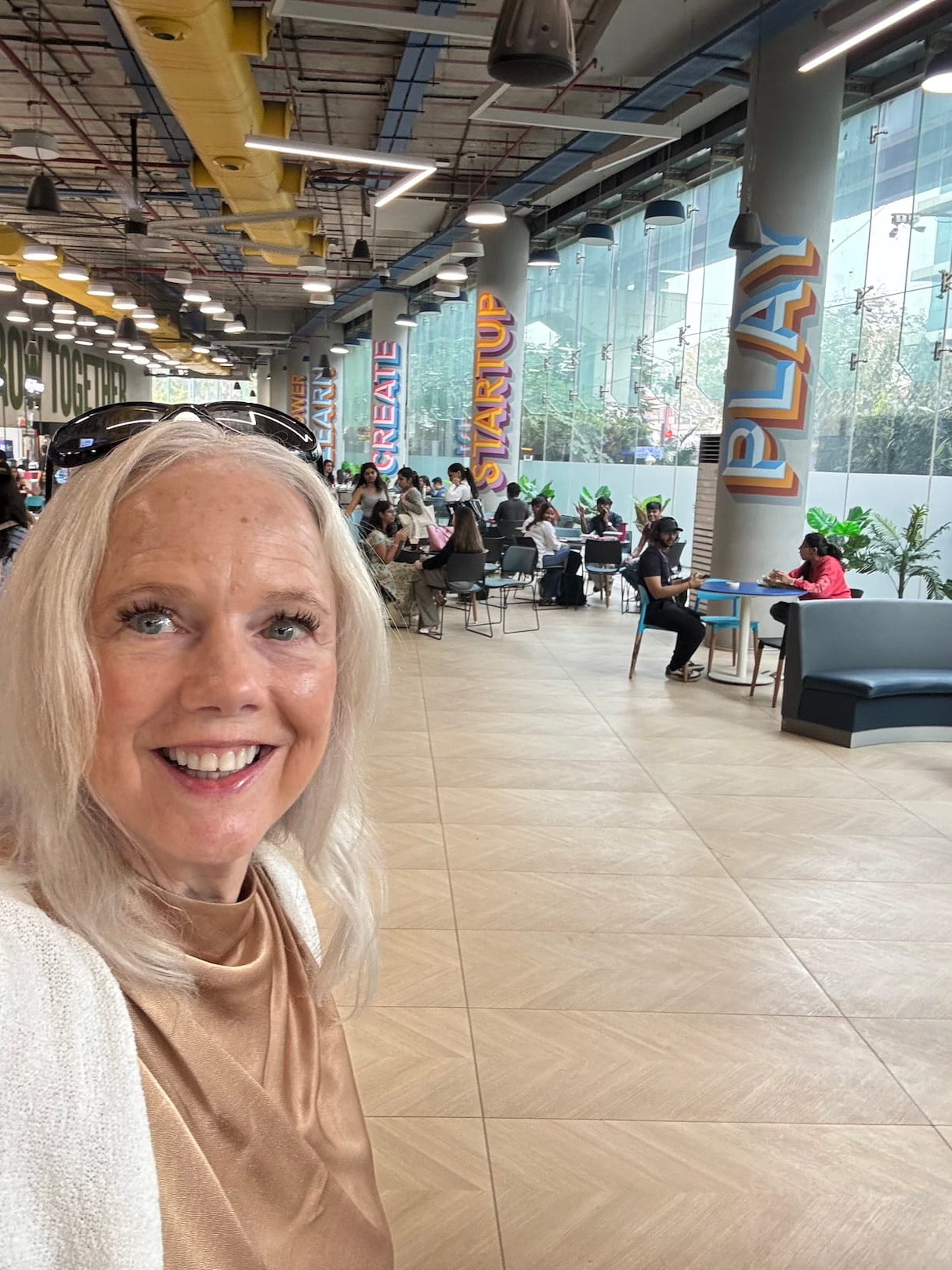
I have been traveling to India since 1997, which gives me the unusual privilege of watching an ecosystem evolve over nearly three decades. India today is dynamic, innovative, and brimming with entrepreneurial energy. But this trip with Paul Belknap, Miller Center’s Director of Impact Investing, made something more clear than ever before. The country’s sheer scale creates real challenges for visibility and convening, even with strong partners and growing momentum. Despite working with more than 50 social enterprises across the country, building a presence for Miller Center requires strategically activating our network and partnering closely with trusted local institutions. And, against this backdrop, the social enterprise ecosystem is increasingly bifurcated, pulling actors toward two extremes and leaving many of the most promising impact-driven enterprises stuck squarely in the middle.
On one end of the spectrum is a vibrant and essential nonprofit sector delivering critical services to underserved communities. India’s regulatory environment reinforces this model. Corporate social responsibility rules require companies to give 2 percent of profits to qualified Indian nonprofits, creating a steady flow of philanthropic capital. At the same time, those nonprofits face strict limits on earned revenue, which makes long-term sustainability difficult and excludes many social enterprises that rely on hybrid or market-based models. The result is a landscape crowded with well-intentioned but structurally fragile organizations.
On the other end of the spectrum is an increasingly commercialized impact investing market. Across conversations with funds, accelerators, and ecosystem leaders, I heard a consistent refrain. Impact may get selected at the beginning, but financial returns dominate decision-making as due diligence progresses. Many investors now resemble mainstream venture capitalists, with a strong preference for tech-first or “deep tech” solutions and commercial-rate returns. While innovation is essential, this narrowing focus leaves little room for enterprises solving real problems in complex, low-margin markets, especially those that need patient, catalytic capital to scale.
What happens in between these two poles is where the valley of death opens up.
Time and again, partners across the ecosystem acknowledged that the current capital stack is simply not fit for purpose for the majority of social enterprises. Yet the prevailing binary mindset of philanthropy versus profit makes it extraordinarily difficult to raise the kind of blended, flexible capital that growth-stage enterprises actually need. This is not a failure of entrepreneurs. It is a structural failure of the system designed to support them.
That reality came into sharp focus through conversations with organizations working across India’s impact landscape. Groups like Aavishkaar have built impressive platforms that span microfinance, venture investing, ecosystem-building, and philanthropy precisely because they recognized that no single instrument is sufficient. Others, like Villgro and NSRCEL, are grappling with the glass ceiling that appears once enterprises reach product–market fit but lack the organizational design and growth capital to break through to scale. At the same time, organizations like Navaka Social Business Fund (previously Yunus Social Business), highlighted how even thoughtfully structured, impact-first debt vehicles operate within regulatory and mandate constraints that limit their ability to fully support enterprises navigating the middle.
This question of how capital moves, and who it ultimately serves, also surfaced in my conversations with AVPN. As a leading network for impact capital in Asia, it is increasingly focused on mobilizing flexible, intentional capital, particularly from family offices and other investors less constrained by traditional CSR structures. Platforms like AVPN can play a critical role in supporting partners and funders who want to engage more deeply with social enterprises in the middle, helping ensure capital flows in ways that are aligned with impact and responsive to real enterprise needs.
This is where Miller Center’s work feels especially relevant. In a bifurcated ecosystem, Miller Center is intentionally positioned in the middle ground, supporting impact-first enterprises that blend mission and market, and investors willing to engage with complexity rather than avoid it. Our approach is not about choosing between philanthropy and profit. It is about understanding the true costs of impact and designing capital and support structures that reflect those realities.
That commitment is also why our planned partnership with Upaya Social Ventures feels so timely. Together, we bring complementary strengths: deep enterprise support, long-term mentorship, systems thinking, and access to catalytic capital. The goal is not simply to fund enterprises, but to create a continuum of support that meets entrepreneurs where they are and evolves as they grow. In India, where environmental enterprises, workforce-focused models, and inclusive growth ventures all face persistent scaling barriers, this kind of partnership is not just helpful. It is necessary.
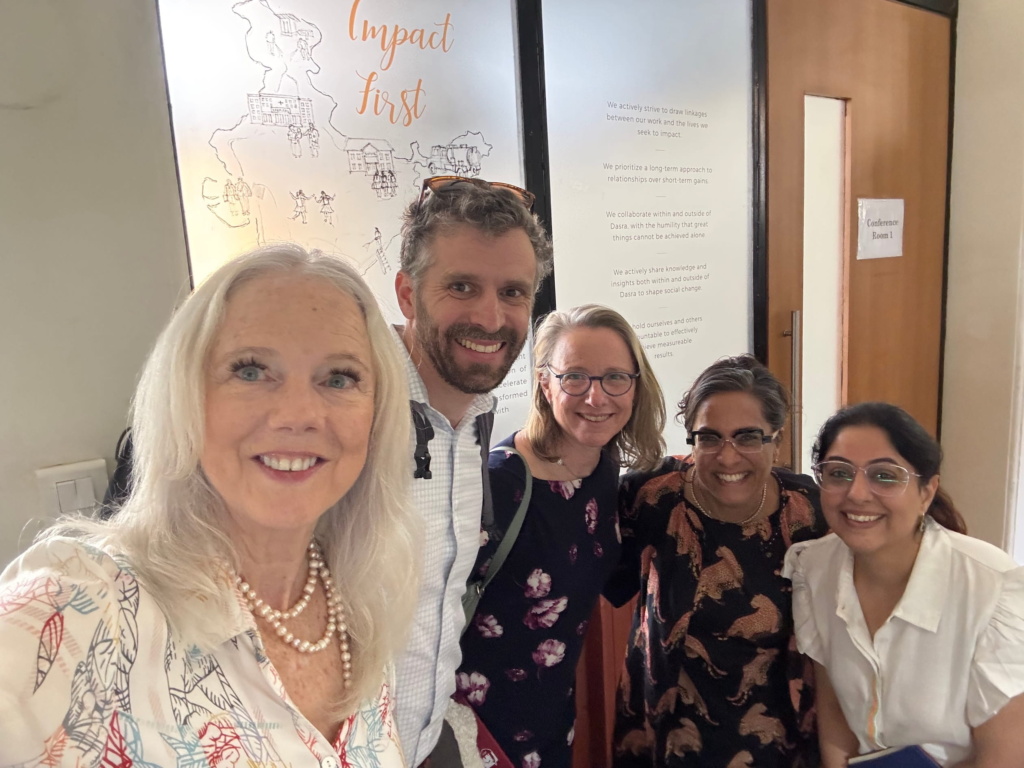
This trip was also strengthened by how we show up institutionally. Traveling alongside Santa Clara University’s Dean of Engineering, Kendra Sharp, reinforced that Miller Center’s value is amplified when we are seen not as a standalone organization, but as part of a university committed to innovation, leadership, and global engagement. Our ability to connect entrepreneurs to students, faculty, and global networks consistently resonated with partners as a differentiator.
What I came away with most strongly was a renewed conviction in our impact-first orientation. In a context where capital is increasingly optimized for speed and scale rather than depth and durability, holding firm to an impact-first lens is not a limitation but a strength. India has all the ingredients for transformative impact, including extraordinary entrepreneurs, deep local knowledge, and urgent social and environmental challenges. The work of bridging the valley of death is not always comfortable, but when what we think, what we say, and what we do are in harmony, it is deeply meaningful. This trip reaffirmed that being “stuck in the middle” is exactly where Miller Center belongs, working alongside social entrepreneurs as they navigate the valley of death and build the future.

__________
Photos:
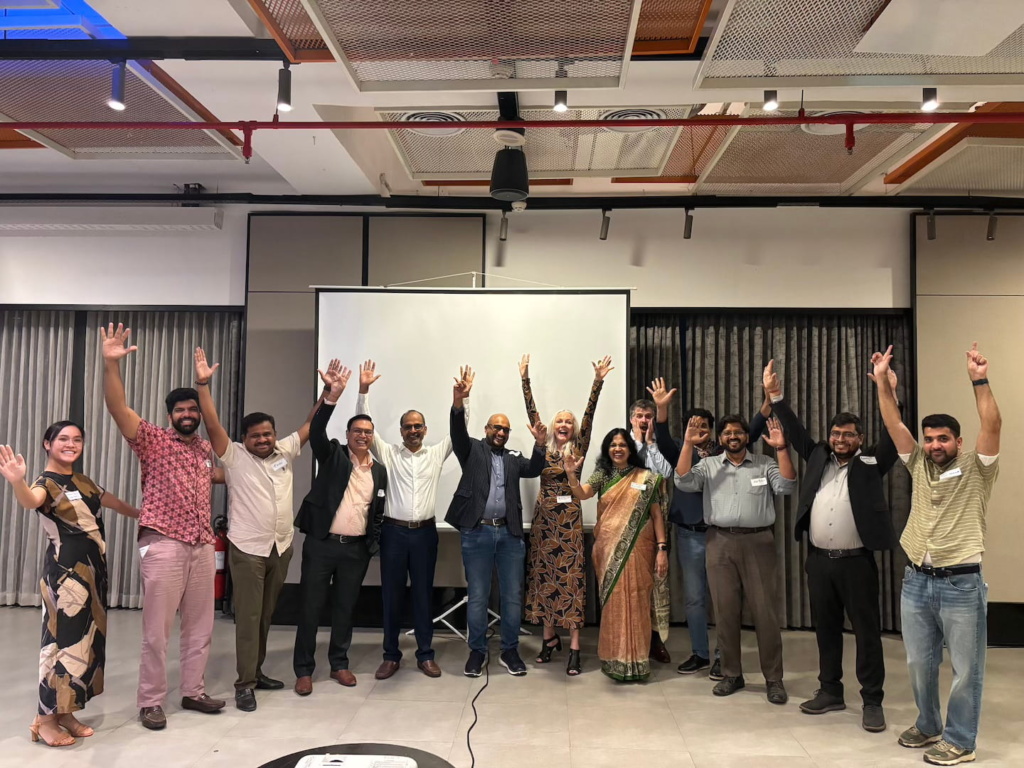
Bangalore Networking Event with Miller Center Community: Athena Hoerl, Ratul Narain (Bempu), Thiru Rajendran, Vimal Panjwani (AgriVijay), Mallesh T M (CultYvate), Prashanth Venkataramana (Oorja), Brigit Helms, Sujuatha Ramani (Pollinate), Paul Belknap, Siva (Miller Center Mentor), Mateen Abdul (Grass Roots Energy), Sheikh Samiullah (Fastbeetle)
Brigit at Atlas Skilltech University
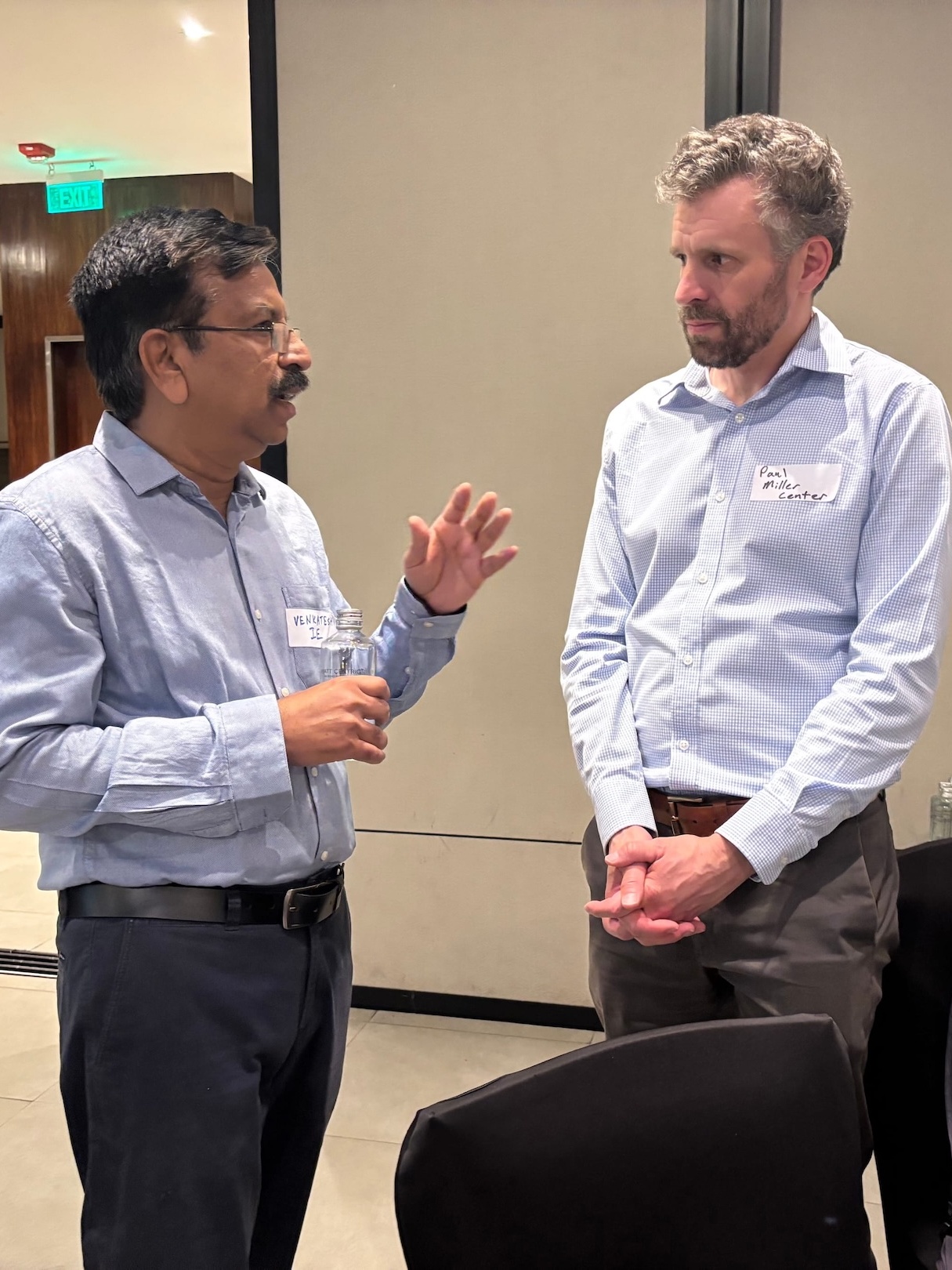
Paul Belknap, Venkatesh Kannaiah (Indian Express)
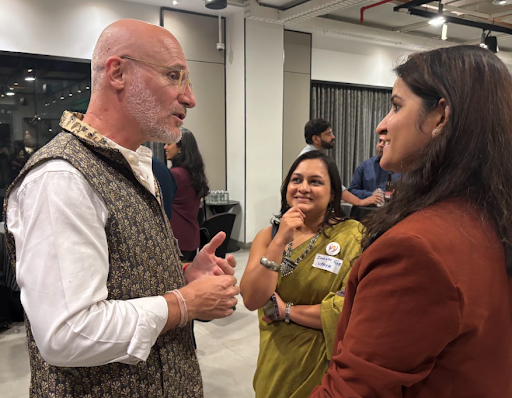
Stefano Funarim (I Was a Sari), Shruti Goel (Upaya Social Ventures), Anvisha Bhardwa (Chevron India)
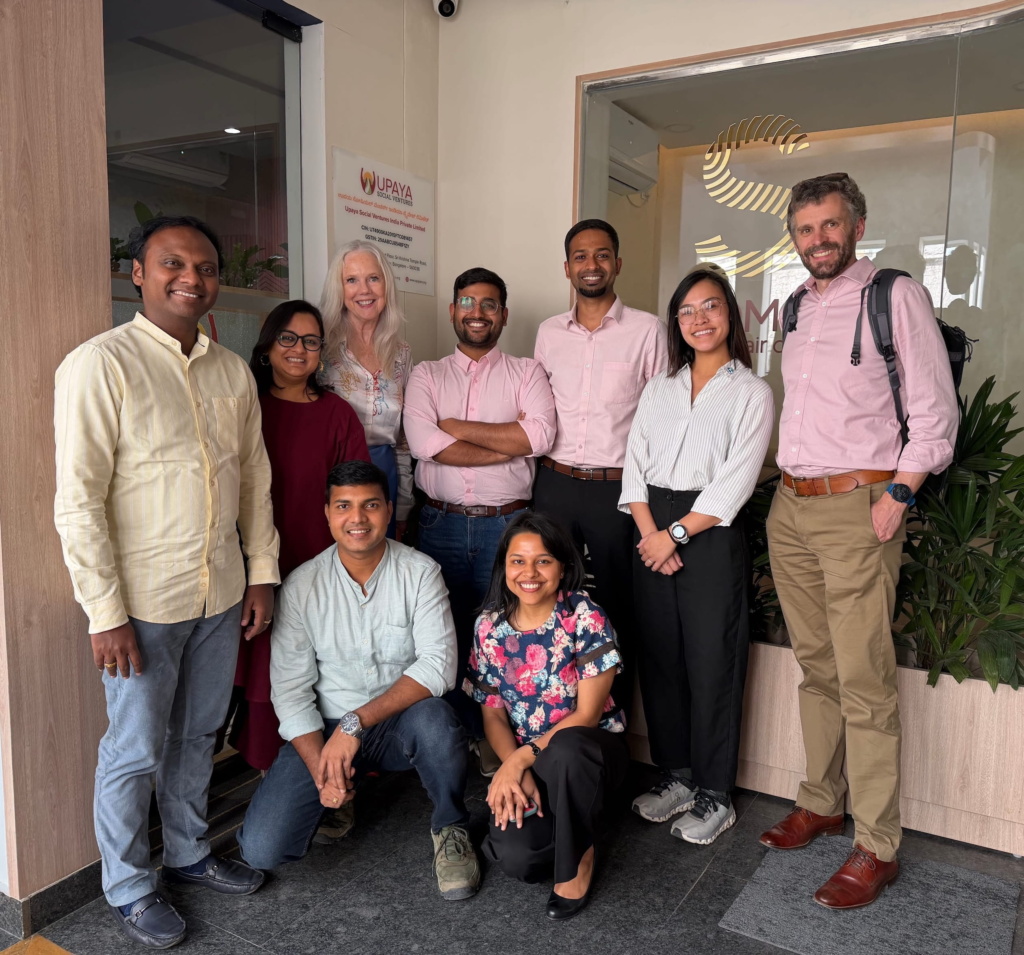
Brigit Helms, Paul Belknap, Athena Hoerl and Upaya Team
Brigit Helms, Paul Belknap, Kendra Sharp (Santa Clara University School of Engineering), Neera Nundy (Dasra), Kavneet Sahni (Dasra)
Bangalore, India