“If you have come here to help me, you are wasting your time, but if you have come because your liberation is bound up with mine, then let us work together.” – Lilla Watson
___
Within the limits of Ciudad de México (CDMX) lies a forest, and within that forest a hill. Atop the hill is a castle—what is technically the only true royal castle in North America, as it is the only one to have ever housed a monarch—and in the castle is a museum dedicated to the history of the Mexican Republic and its revolution against the Spanish Empire. The forest, mountain, and castle are all called Chapultepec, which means “hill of the grasshoppers” in the Nahuatl language.
It is the first day of September, and a rainstorm is barrelling into CDMX, though so far it is only a drizzle. Fog rolls through Paseo de la Reforma, nearly swallowing up El Ángel de la Independencia a mile away from the castle. I am atop Chapultepec with ten Santa Clara University students, two staff members from the Ignatian Center for Jesuit Education, and a colleague from the Universidad Iberoamericana, and we are here for an immersion trip called Ancestral Roots and Sustainable Futures. The immersion is the first step in a new collaboration between SCU’s Ignatian Center for Jesuit Education and our team at Miller Center for Global Impact as a part of Leading Through Laudato Si’, SCU’s sustainability action plan, in which student immersion trips include site visits to social enterprises in Miller Center’s network. Almost all the students on this trip, and each of my three colleagues, have Mexican ancestry. It would be easy for me to feel like an outsider, but my companions accept me with open arms, and as is often the case with humans from any background, we are more similar than our circumstances would lead one to believe.
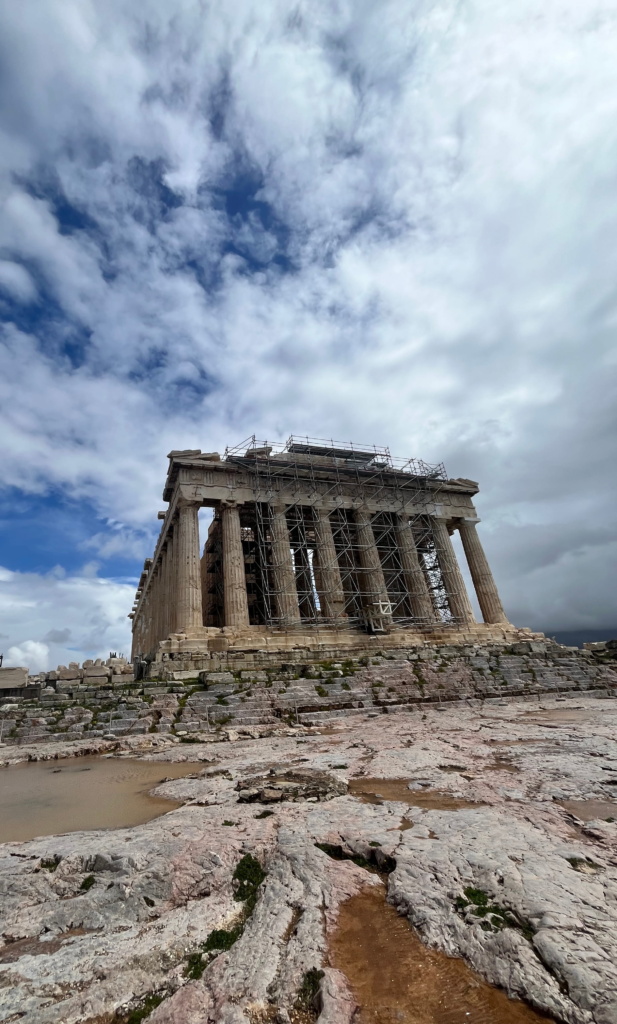
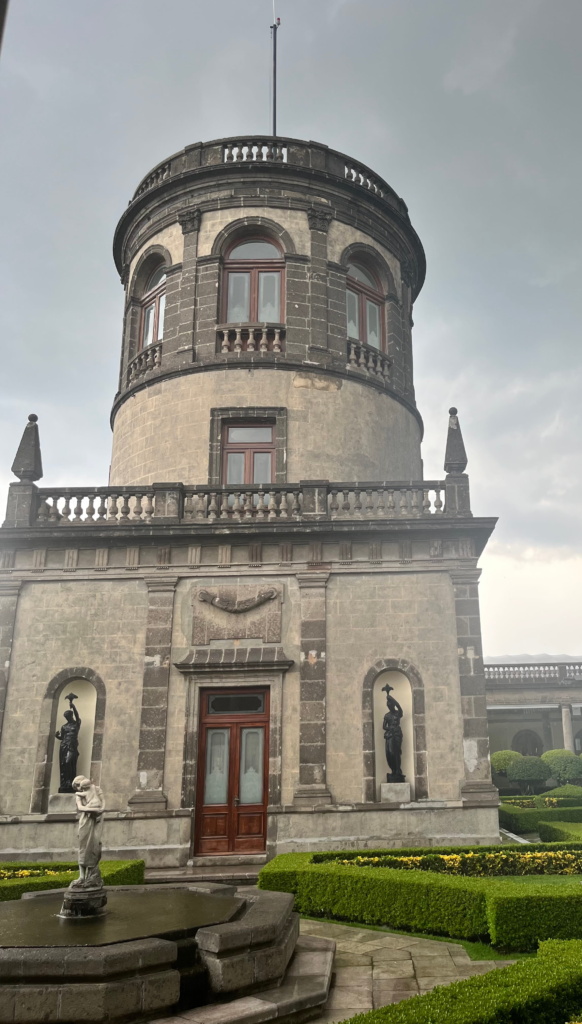
Standing atop this acropolis, I think back to my own ancestral roots, and to April of this year, when I hiked to the Parthenon alone on a similarly rainy day in Athens. From the top of the high city, I stared out at the height of a civilization my grandparents had to leave behind to come to the States. Later, the students talk about their responsibility to their families, how they feel they must maintain the connection between their ancestral home and their present one, and I caution them against putting the weight of the world on their shoulders. I am a hypocrite.
____________
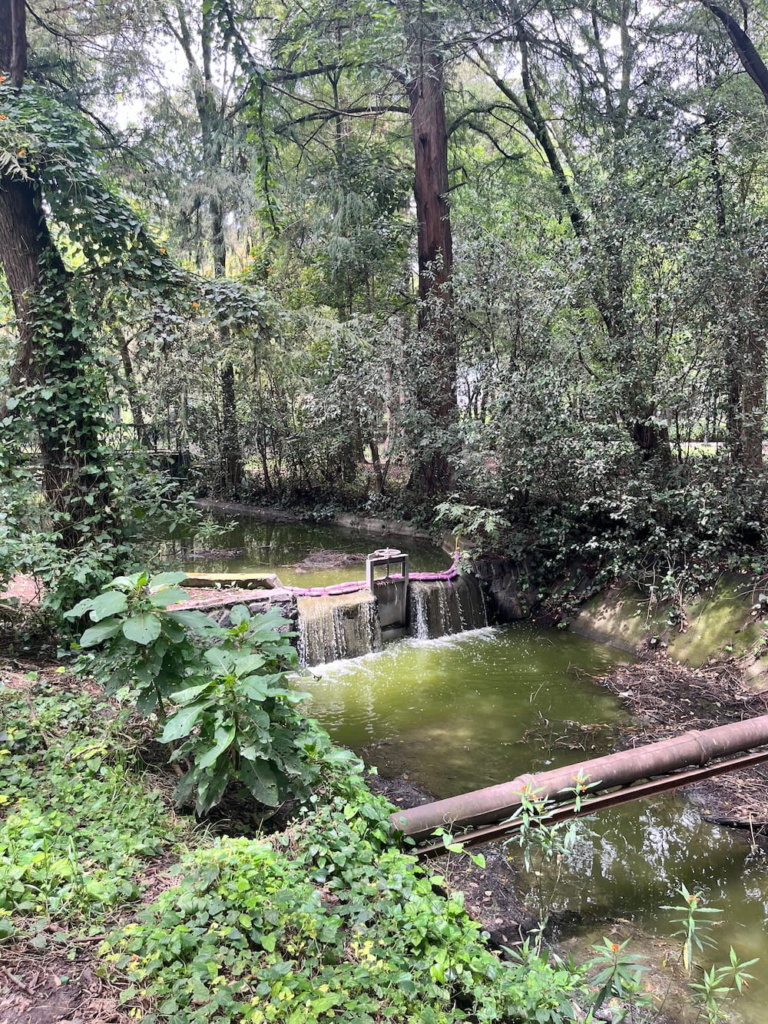
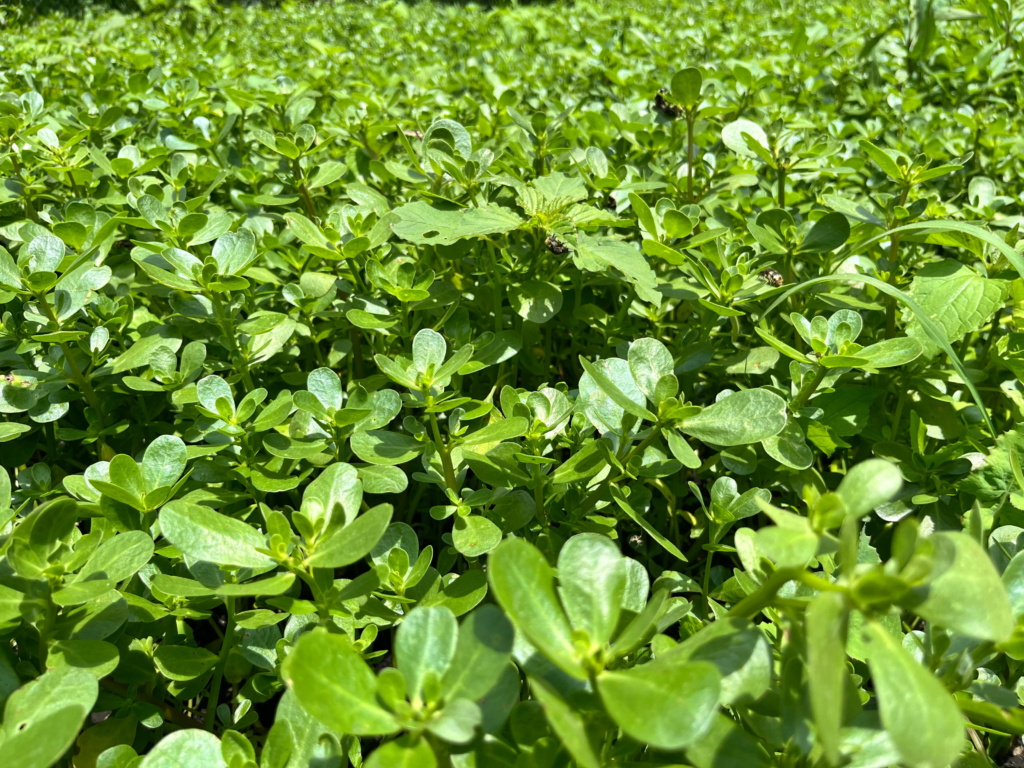
Before we climbed the hill and explored the castle, we spent the morning volunteering with an organization called Matter of Trust in the forest using reclaimed dog fur to improve soil health and filter contaminants out of the streams. Dog fur is perfect for this application, we learn, as it is a natural fertilizer, is hydrophobic, and in abundant supply. Three days later, as we pluck verdolaga from the soil of a human-made farming island in the canals of Xochimilco, called a “chinampa,” we mention to Philippe, our kayaking tour guide with the social enterprise Rutopía, that we used fur as fertilizer in el Bosque de Chapultepec. Philippe refers to the fur as “un ofrenda”—an offering to the earth. Of course it is. What a shame that we have considered something so capable of nourishing the earth as garbage to be wrapped in plastic and sent to landfill.
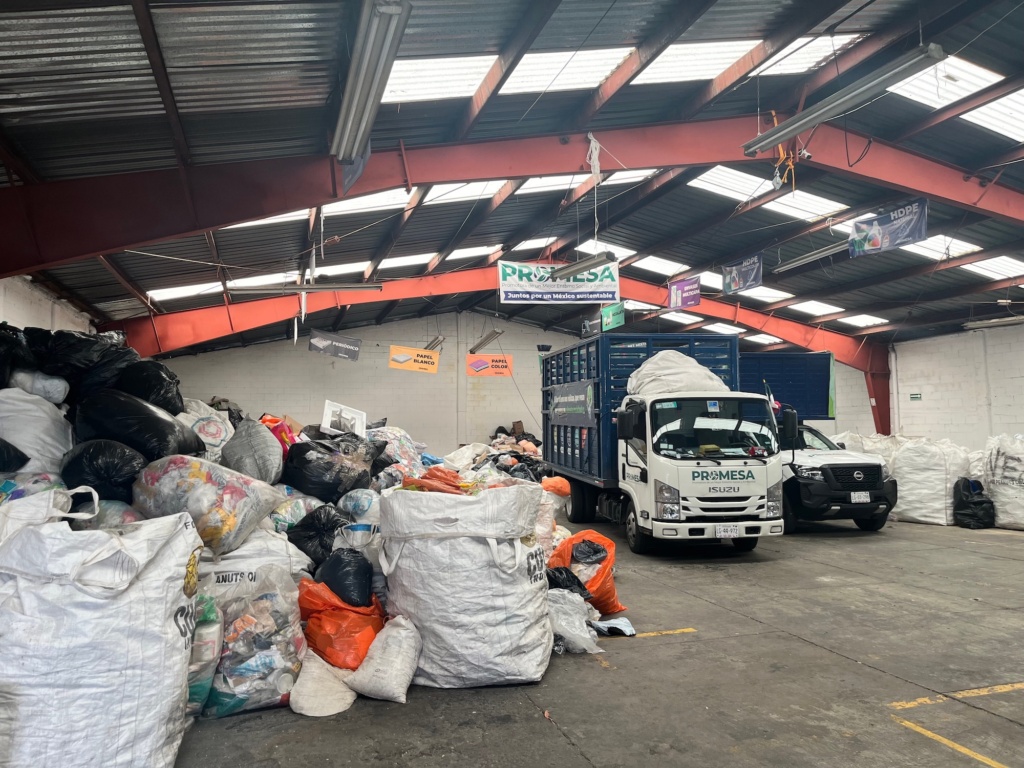
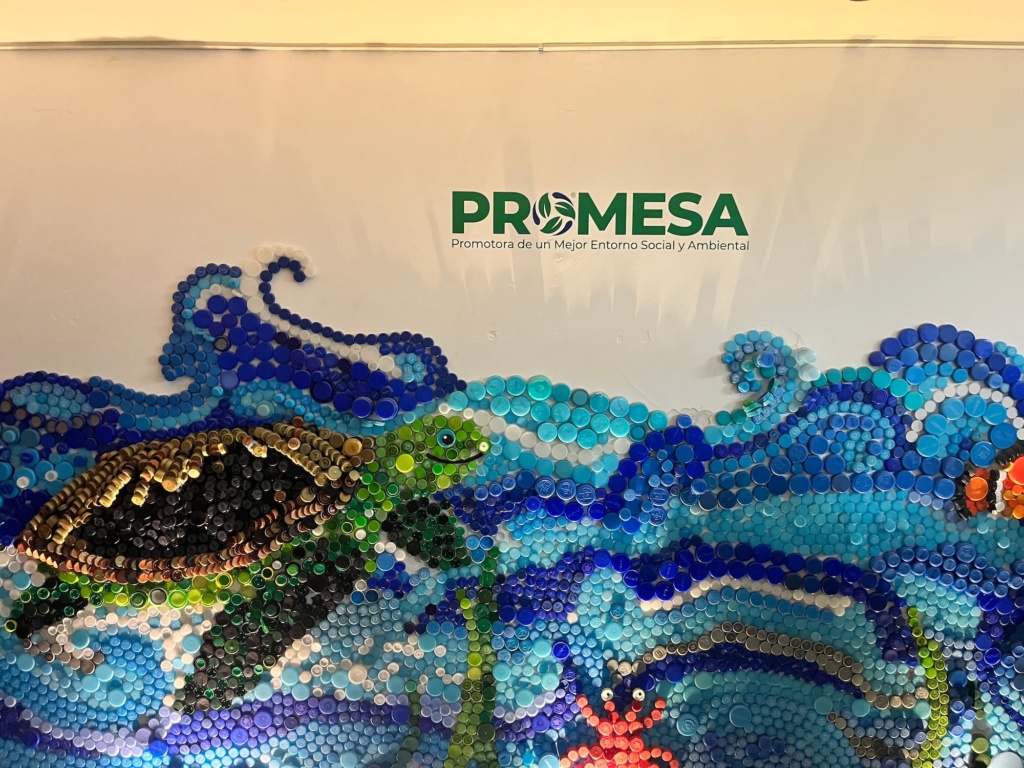
Julián Galindo from Grupo PROMESA, another social enterprise, also challenges our idea of what we consider garbage. Grupo PROMESA is an organization that implements environmental education in schools, companies, restaurants, and households. They are specifically focused on recycling and reducing waste. What is the first step to reducing waste? Questioning what we consider to be garbage. Julián asks the students what the difference between the two is, and then explains that waste can be reused, repurposed, or recycled. The dog fur from Chapultepec is waste, but not garbage.
At the end of the session, Julio Álvarez, CEO and founder, joins us and tells the students about his experiences with Miller Center. He talks about how meaningful the programming Miller Center offers is, but emphasizes the importance of the community we are building within our entrepreneur network. He explains that leading a social enterprise can be lonely—long hours, thin margins, and responsibilities to customers, employees, board members, funders, and the community weigh heavily on one’s shoulders—but it doesn’t have to be. He has found friends and peers who understand his struggles through the network and know how to support each other through the challenges that being a social change leader presents. In recent years, Miller Center has developed an increased focus on programs that bring founders and executives of impactful organizations together in community and solidarity. Julio’s words emphasize the importance of this work, and this trip emphasizes the importance of being together with each other and with the world around us.
On one of the days we spend at Ibero, professor of economics, Dr. Carmina Isabel Jiménez Quiroga, asks us to draw a forest and to include the things and beings that make up a forest. As we share our drawings, she notes that none of us have drawn people or homes, yet in Mexico, the forests are a part of civilization, not apart from it. This sticks with us throughout the trip. It certainly still sticks with me.
Brigit Helms, our executive director at Miller Center, is wont to share a quote often attributed as an African proverb: “If you want to go fast, go alone; if you want to go far, go together.” The road to a sustainable future is not a fast one. The end of the road—if there is one at all—is far down the line; we will not get there alone. I think of words from a song we used to sing at camp:
Don’t walk in front of me, I may not follow /
Don’t walk behind me, I may not lead /
Just walk beside me and be my friend
To do this work, we cannot just follow, and we cannot just lead; we are, in Jesuit terms, accompanying one another. We are accompanying the earth and our ancestors whose bodies now dwell within it. We are ofrendas to each other and to everyone who will inherit what we leave behind. We are all a part of the giant web of existence, and our actions impact the whole.
My colleagues at the Ignatian Center use the quote by Lilla Watson at the top of this article quite often: “If you have come here to help me you are wasting your time, but if you have come because your liberation is bound up with mine, then let us work together,” and I think there is hardly a better quote to describe the work of creating a more sustainable future. We are constrained and restricted by our unsustainable systems, and the only way to overcome them is collectively.
And so I think back to the weight of the world on Julio’s shoulders, on the shoulders of the students on the immersion, and on my own, and I remember Miller Center’s vision: a world in which all people are architects of their own future. We are not responsible for the world; we are responsible to the world, and to each other. We are responsible to the collective liberation of all peoples and all beings, including ourselves. We are each a part of the whole, but none of us is Atlas, responsible for holding up the sky.
This idea runs counter to one that many of us—Americans at least—grew up with in history classes. The prominent Great Man Theory tells us that great men, or heroes, are responsible for the course of history. And while great men (in stature, wealth, and power, if not moral integrity) attempt to shape our world today, I urge us all to remember our roots, and to keep our eyes on a sustainable future. In a world of billions, it is not great men who shape the future, but the collective actions of many.
Social entrepreneurs give us a good example of what this can look like: individuals working in community to make the world a more just, equal, and democratic place. They are not great heroes who will save us from ourselves; they are good people, committed to the idea that we all have a stake in a better world. But social entrepreneurship is just one tool among many, and the tool is not what makes a better world; it’s the work.
Hi ho.
Anthony Phillip Sampson
P.S. A huge heartfelt thank you to Maria Autrey-Noriega, Daniella Lubey, Fernando Clavel Baranda, Darcy Phillips, Diego Avilla, and Pedro Aguirre-Salas for planning and facilitating the immersion trip.
____________
Photos:
At the top of the castle of Chapultepec, storm clouds gather.
A moment of blue skies peeking through the clouds at the Acropolis in April of this year.
“Sausages” of dog fur are used in el Bosque de Chapultepec to filter oil, bacteria, and other contaminants from a waterway.
Verdolagas, or purslane in English, a succulent often considered a weed, grow on a chinampa in Xochimilco, Ciudad de Mexico.
Grupo Promesa’s sorting/processing facility in Mexico City. The side of the truck reads: “If aliens visit, they will see we are a planet that recycles.”