“A human being unable to have a meaningful impact on the world ceases to exist.” —David Graeber, Bullshit Jobs: A Theory
The World’s Ending, and Your Diploma Is in the Mail
When I graduated from Santa Clara University with a BSc in Marketing and a BA in Theatre Arts in June of 2020, I knew one thing: the existential dread I felt as a result of the world’s multiple overlapping crises could only be cured by building a career that added some good to the world.
In other words, I knew I had a responsibility to leave it better than I found it.
I felt another thing: I was behind.
In undergrad, I had spent my summers in odd jobs, first as a plumber’s assistant, then a game master at an escape room, and finally as a cook (and occasional bartender) at my family’s dive-bar-slash-burger-joint back home in Seattle. During the school years, I overloaded on classes each quarter, performed in and wrote for shows in the Theatre department, and volunteered as a coordinator and then chapter director for a national non-profit called Camp Kesem.
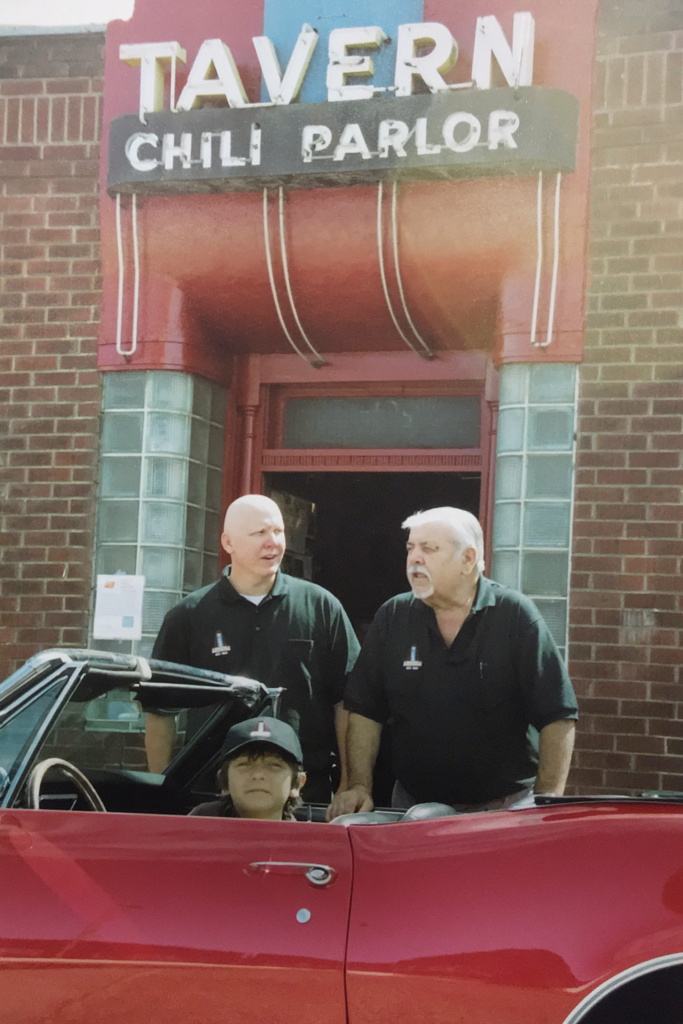
Left to right: My uncle Mike, me sitting in Guy Fieri’s car, and my Pappou Phil outside of the aforementioned dive-bar-slash-burger-joint during Guy’s visit for Diners, Drive-Ins, and Dives
I would like to say that I was too busy during the school year to apply for summer internships. The truth is that I was afraid of putting myself out there. Afraid of putting in the work of applying, writing a cover letter, adjusting my resume to align with the job description, getting my hopes up, and being rejected.
But through Camp Kesem and the Theatre department, I was doing work that felt impactful and purpose-driven. And I was lucky enough to have enough scholarship, financial aid, and support from my family to pursue these unpaid opportunities during the school year. In the summers, though, I had to make money. This gave me another excuse to avoid my fear: so many internships that interested me were unpaid.
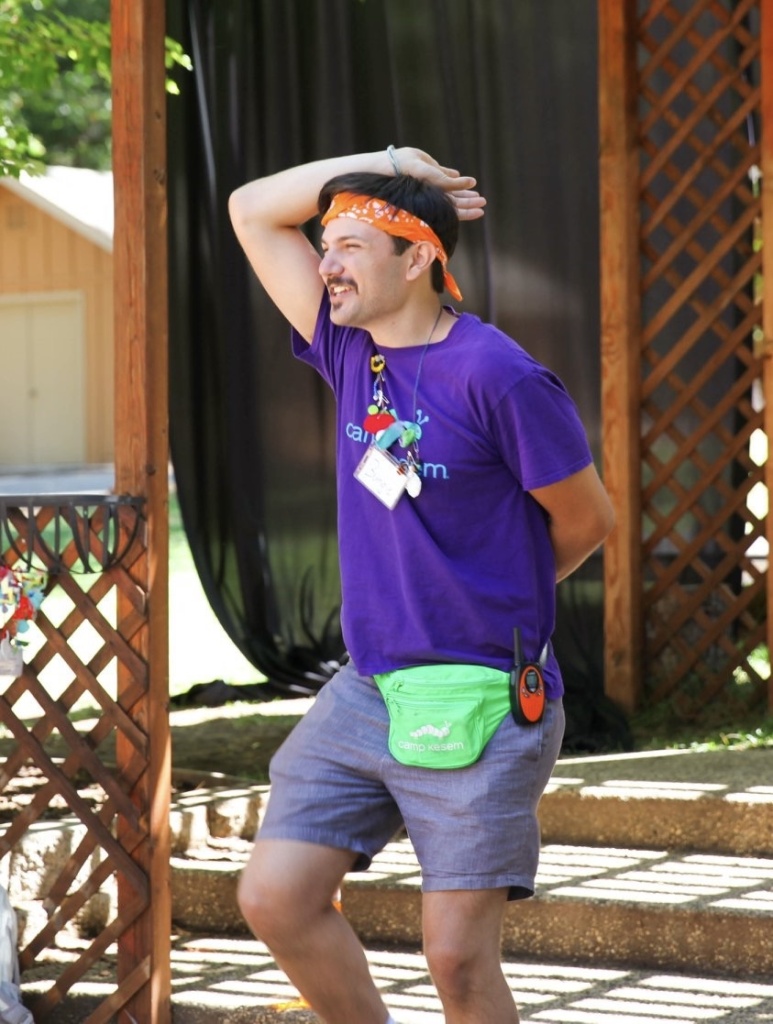
My camp counselor alter ego, Bungie Bungerson III, imitating a chicken while leading campers in their drama rotation.
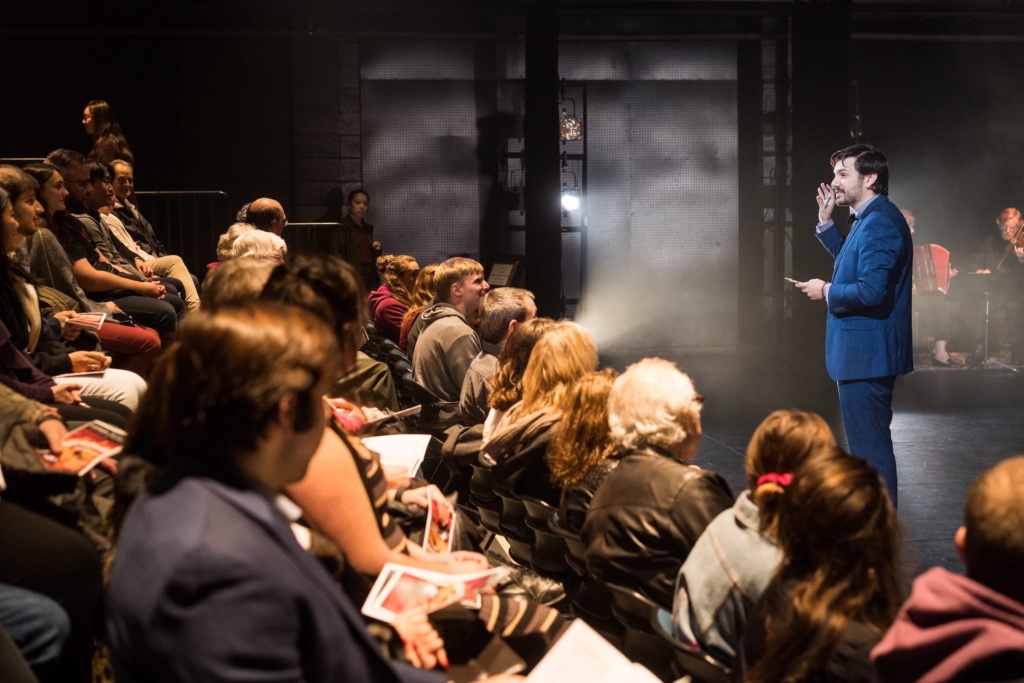
Me welcoming an audience in character as the enigmatic maître d’ of a french restaurant that is in limbo… or perhaps purgatory.
So Much Time; So Much To Do
When I graduated, I was rudderless. I knew I wanted to do something that mattered, but I had no idea what my options were. At once, there were too few opportunities and too many possibilities.
Eventually, after a stint helping the dive-bar-slash-burger-joint make it through the thick of COVID, I moved back to the Bay Area. With no job lined up and a year and a half of restaurant money in my pocket, I restarted my job hunt. I had just finished working a contract role at the SF-Marin Food Bank when I was lucky enough to be referred by a friend to an opening for “Coordinator, Campus Engagement and Operations” at Miller Center. Suddenly, I found myself not only back in the Bay Area, but back at SCU.
In this role, I was going to help students who, like me, wanted to make a difference, but didn’t know how to connect their area of study to the problems of the world. Perfect.
The Kids Are More Than Alright
This past summer, I managed my fourth cohort of summer interns. Twenty-six Santa Clara University students worked with 10 of Miller Center’s Community Partners and 9 Social Enterprises from our global network. These students came from 15+ major areas of study across all three undergraduate schools and colleges, as well as two graduate schools: the Leavey School of Business and the School of Engineering.
Some of them had majors you might expect: Marketing, Communications, Environmental Sciences, Management Information Systems, and Finance. Others may surprise you: Psychology, Dance, English, and Electrical Engineering.
They worked on projects to redesign websites, develop mobile apps, automate processes, organize data for annual reports, build fundraising proposals, streamline accounting processes, and much more.
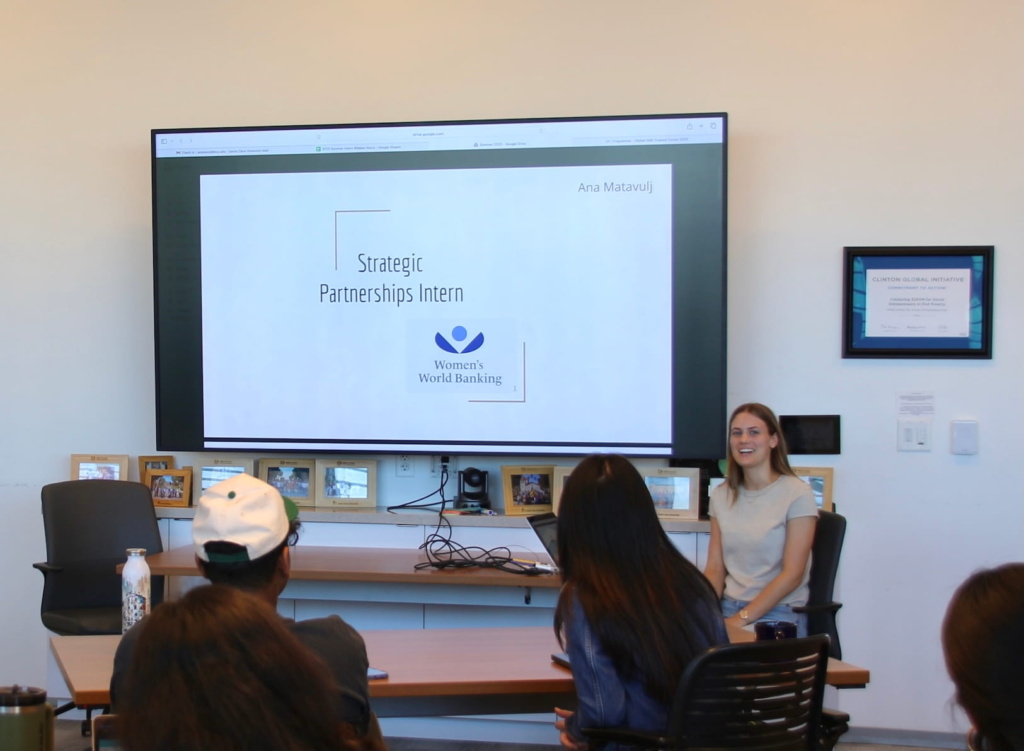
Ana Matavulj ’26 tells us about her experience with Women’s World Banking over the summer
Nearly half of our interns were international students, as Miller Center is one of the few opportunities international students have to complete paid internships while staying in the U.S. Aside from Miller Center’s internships, many international students wind up working in SCU dining services. And while I fervently believe that everyone should work in a service industry at some point in their lives, these students should not be excluded from meaningful resume-building work simply because they are in this country on a visa.
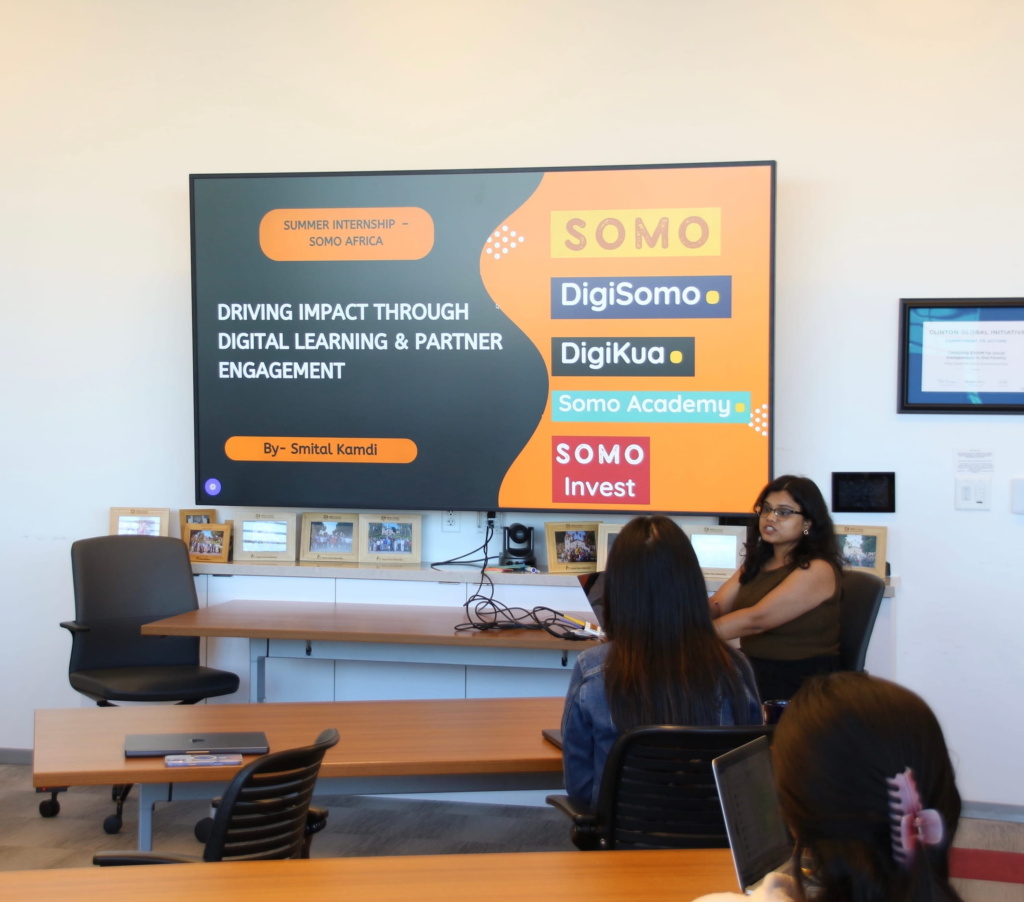
Smital Kamdi, MBA student, shares her work with Somo Africa.
Four were LEAD Scholars, SCU students who are the first in their family to attend four-year universities. These students receive a wealth of support from the small but mighty LEAD team—first-gen students at SCU who participate in the LEAD program graduate at a rate of 84%, more than 3x the national average. But what if they could build a career that can sustain themselves and improve the well-being of their communities?
All of them have a passion for making the world a more just, humane, and sustainable place, and each of them created tangible value for an organization that is making an impact toward ending global poverty.
Paid, On Purpose
But at Miller Center, we focus on providing value to students, as well as the entrepreneurs we work with, both through meaningful experiences and compensation. All of our interns are paid directly by Miller Center. At rates of $19-20/hr over a maximum of 250 hours during the 10-week program, students earn up to $5,000 for a summer of part-time work that has actual purpose, with 17 interns continuing their projects into fall quarter for an additional 100 hours.
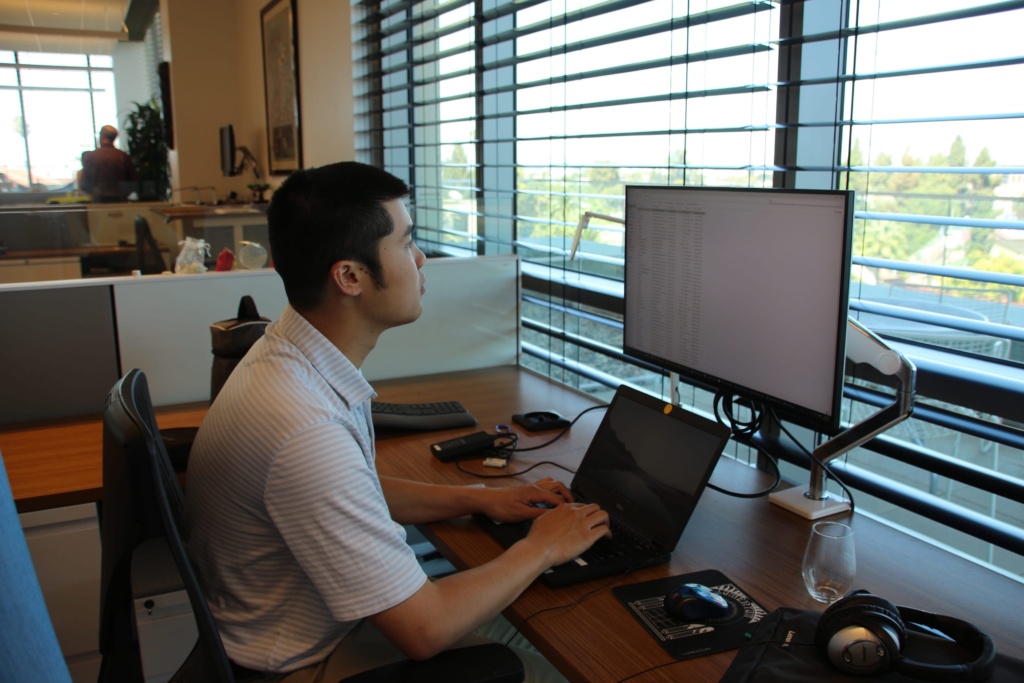
Richard Pham ’27 works at Miller Center’s office
For us, paying students is a reflection of our values: that access to impact work should not depend on personal privilege, and that people doing meaningful work deserve to be compensated for it. And while it doesn’t compare to the $34/hr average for summer internships in the San Francisco Bay Area (according to Indeed, but skewed by tech jobs), it’s meaningful compensation in a competitive job market. With so many career-advancing opportunities gatekept behind unpaid roles, students with more financial need are disadvantaged. When internships and entry-level roles are unpaid or underpaid, successful careers are mainly possible for those with a built-in safety net.
Access Isn’t Accidental
At Miller Center, we believe that meaningful work should be equitable, and that those closest to the issue have the best chance at knowing what needs to be done to solve it. This is why we focus on working with locally led market-based social enterprises in less developed economies—companies and solutions that are built from the community up, rather than imposed from the top down. The same notion applies to how we need to think about addressing poverty and economic inequality in the US: the solution is unlikely to come about without the lived experience of children of the working class. So we must pay students and young professionals what they deserve. Everyone should have the opportunity to do meaningful work and be compensated for it accordingly.
In addition to pay, the majority of our students this past summer participated in Career Launch’s Launch Your Career program. Through Career Launch’s interactive program, the students learned how to grow their network of impact-oriented professionals. In addition, I organized weekly career conversations with Miller Center staff, mentors, and entrepreneurs who have built careers that positively impact the world around them. During the 10-week program, we talked about philanthropy, nonprofit work, unilateral and multilateral aid, social entrepreneurship, microfinance, impact investing, and conscious capitalism.
Intern Kristin Hill ’25 gives an overview of her work on AlphaMundi Foundation’s 2024 annual report.
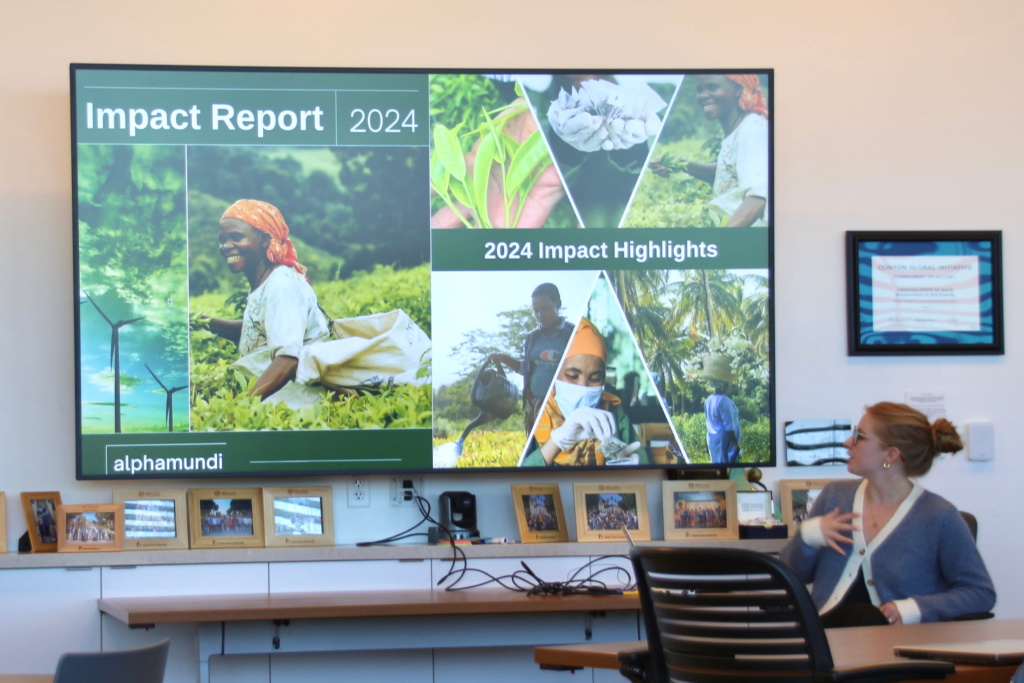
I am proud to say that no student leaves Miller Center’s Summer Internship Program feeling quite as lost as I did when I graduated in 2020. What’s more, students shared how valuable the internship was to them for gaining professional experience, making meaningful contributions, and expanding their view of potential careers.
But There Is Always More Work to Be Done.
This year, we hope to provide roles for up to 35 students. The most yet.
To do this, we are recruiting differently. SCU students will apply to work in one or more of the following areas:
- Marketing & Communications
- Data Systems & Impact Measurement
- Business Administration
- Partnerships & Sales
- Web Design &/or Computer Engineering
From there, Miller Center staff will work to source as many roles as possible for these students with social enterprises and partner organizations around the world.
If you’d like to support the internship program, please consider donating to Miller Center at this link. $5,000 funds an internship for one SCU student, but any amount supports our work toward ending global poverty and creating a thriving global community of changemakers.
Hi ho, and off to work we go!