As Miller Center Fellows, we finished up our spring exams on wastewater engineering and boarded a plane to Paraguay two days later, with the bold plan to fix a broken wastewater treatment plant at a cheese shop. A question nagged at us: How could we possibly be helpful, having barely any real-world engineering experience?
By the end of our research at Fundacion Paraguaya’s Cerrito Campus Self-Sustaining Agricultural School, we realized we had been asking the wrong question. We assumed that for our time to be worthwhile, we had to contribute engineering knowledge to our enterprise. Ultimately, though, the big lesson was what working with social entrepreneurs taught us about being engineers.
The gift of communication
When we arrived on campus, we quickly realized that our boss spoke limited English. Beginner Spanish speakers ourselves, we opened up Google Translate and got to work. Except – it wasn’t that simple. It took the entire first week before we had a productive meeting. It took a mix of drawings, hand motions, and translation apps before we could understand our boss and our project.
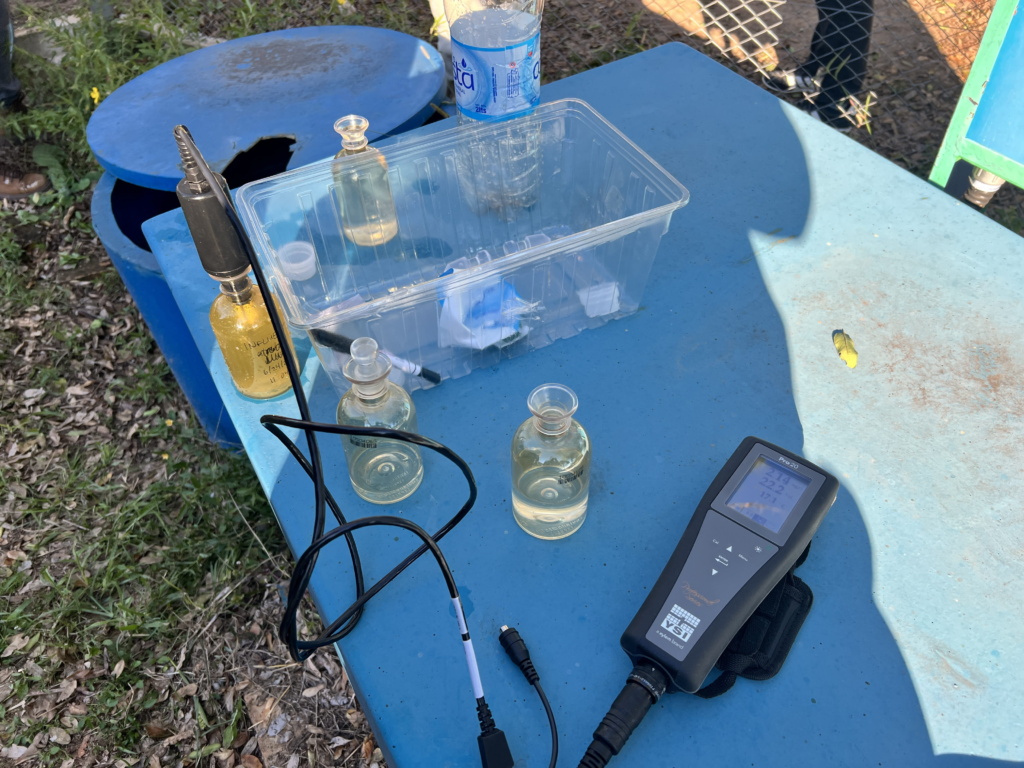
For example, we struggled to understand our boss’s hesitation to let us test the oxygen content of the wastewater, frustrated that we lugged a dissolved oxygen sensor all the way from Santa Clara. It wasn’t until one of our breakthrough meetings that we realized our boss didn’t know we had a sensor with us. Once he learned that, he told us to go ahead and use it as much as possible.
Communication is key to engineering, no matter where you are working. We had been told this throughout our education, but doing engineering in Spanish made this knowledge real. We had to take time to understand the people we were working for, and working through a language barrier helped us realize that any ability to communicate is a gift.
The importance of help — and the unexpected places you can find it
At the end of our workday, we walked home past the basketball courts. It became a nightly tradition to play pick-up with students from the school. We were fast friends with the students, and they asked about our project. We saw the joy of camaraderie as something separate from our research, but this was far from the truth.
One student worked at the cheese shop and was able to provide us with key insight into operations in the cheese shop. Another student, a strong English speaker, was able to help us translate with our boss later in the project.
After our first week, we were lucky to get another technical mentor, Kim Montiel. Taking us under her wing, Kim helped us with everything from calculations to navigating Paraguayan work culture. When she had a question, she found the right person in the community to ask. Having a mentor felt like discovering a new superpower.
Following her lead, we started asking for more help too. The need for a measuring stick brought us to Carlos, the school’s carpenter. We relied extensively on his expertise throughout the project, making daily trips to the shop and getting advice on the best way to measure and build things for our project.
We live in a world where you can look anything up and buy measuring sticks at the hardware store. It’s the act of asking for help, however, that created meaningful relationships for us. These relationships gave us access to years of experience, which ultimately changed the course of our project. Going forward as engineers, we’ll keep asking for measuring sticks, shooting hoops, and seeking mentorship.
Do the right project
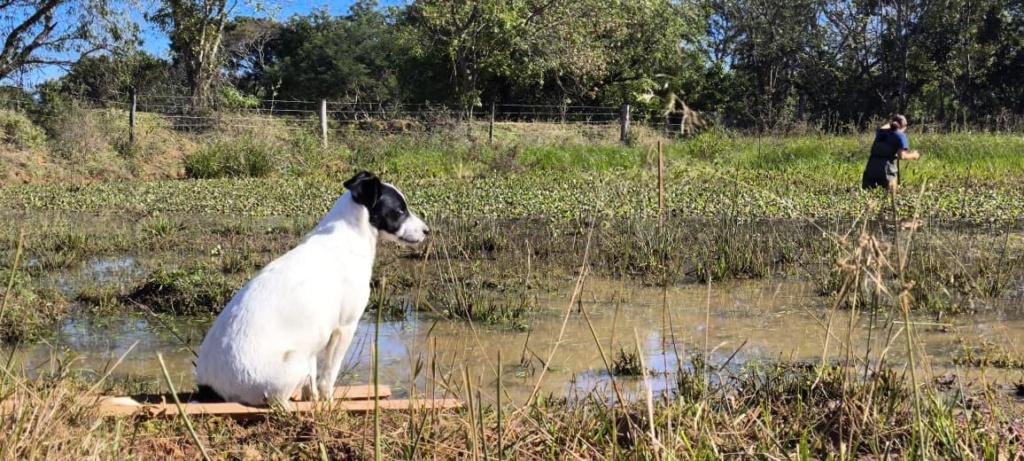
Despite our struggles, being new engineers was also an advantage. We were forced to ask questions, sit with the problem, and we couldn’t revert to a solution we’d designed before. We spent our time in-country observing patterns with the treatment plant, taking measurements in the pond the wastewater was discharging to, and learning about native plants with water-treatment potential.
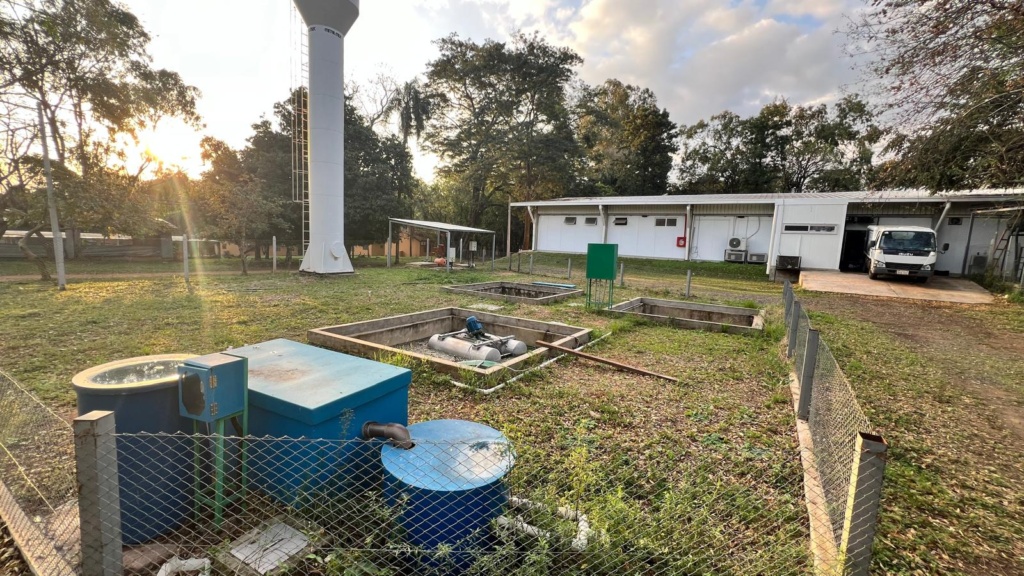
We concluded that it may be possible for the school to greatly simplify its treatment process — or even bypass the treatment plant completely. Had we been seasoned veterans on wastewater treatment, this could have been easy to miss.
Engineering is much more than a technical exercise. Designing a wastewater treatment plant can be done using a textbook, 6000 miles away. Designing for and with people, however, is where the challenge, reward, and learning that being in-country provides. We were able to contribute in different ways than we expected — less on the technical side of things, and more by just being there with the time and willingness to learn. As we head into the workforce with ideas about communication, mentorship, and project selection that we learned from social entrepreneurs, we are beginning to feel like engineers.
_________
Photos:
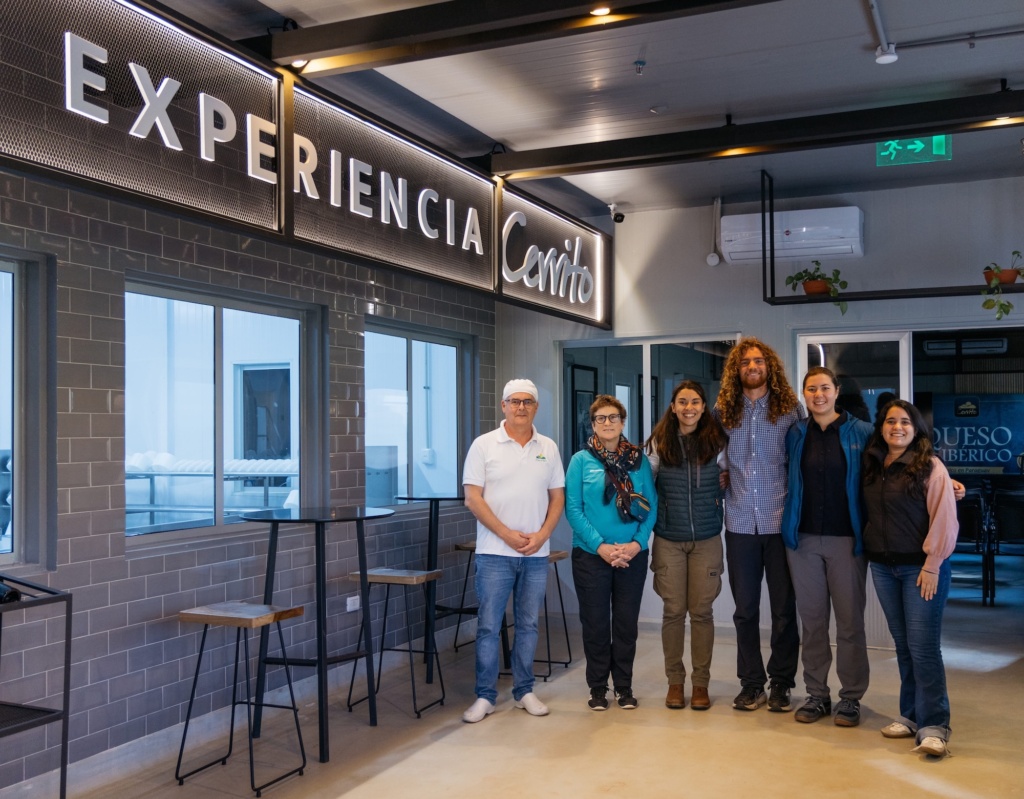
Fundacion Paraguaya’s Cerrito Campus Self-Sustaining Agricultural School Group Photo
Dissolved oxygen sensor testing wastewater
A local onlooker
The wastewater treatment plant
