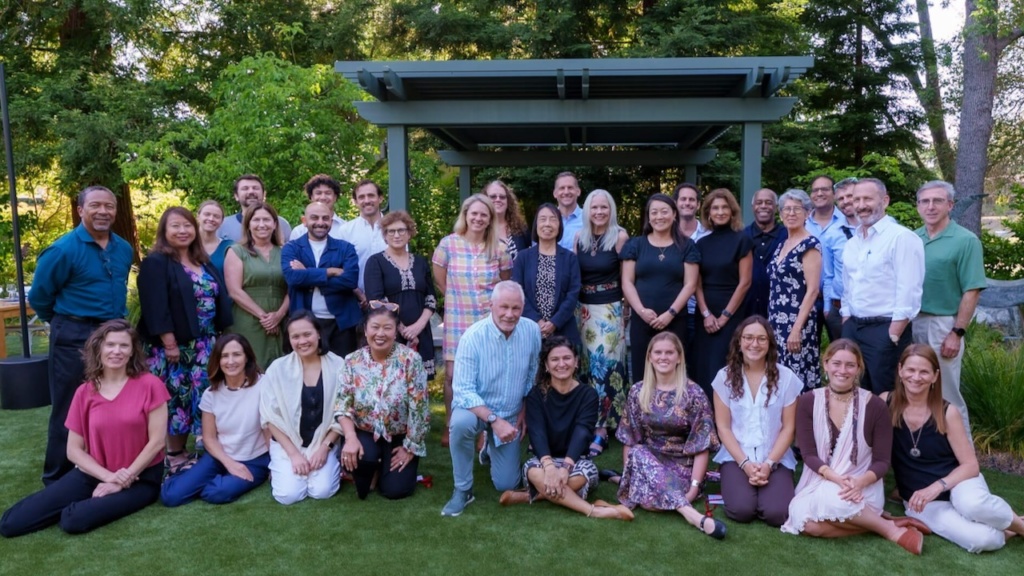
At Miller Center’s 2026 Advisory Board Retreat, we invited five social entrepreneurs from across Africa, Latin America, and Asia to reflect on a timely and difficult question:
How is the global social enterprise landscape changing amid foreign aid contractions, geopolitical instability, inflation, shifting markets, and growing uncertainty?
The conversation brought together entrepreneurs working in rural water systems, renewable energy, fintech, menstrual health, and ethical artisan supply chains. Their enterprises operate in very different sectors and geographies, but many of the themes that emerged were strikingly similar.
What surfaced was not a story of collapse or pessimism. Instead, the panel revealed a sector being stress-tested — and, in many cases, adapting in real time.
Again and again, the entrepreneurs spoke about resilience, reinvention, diversification, operational discipline, and the importance of community during periods of instability.
The Ripple Effects of Aid Contraction Extend Far Beyond NGOs
Several entrepreneurs described how reductions in USAID and other donor funding are reverberating far beyond nonprofit organizations themselves.
Wesley Meier of Cova, which works on rural water filtration systems in Central America, shared how donor-supported research partnerships, environmental monitoring systems, and public-sector data infrastructure have slowed or disappeared in recent months. He noted that organizations like the World Bank and USAID had previously played important roles in supporting ministries, research institutions, and local ecosystem actors involved in water quality monitoring and planning.
Similarly, Diana Sierra of Be Girl reflected on how deeply foreign aid systems are embedded within countries like Mozambique. She noted that USAID-supported organizations and implementing partners collectively represent one of the country’s largest employment ecosystems outside of government itself, meaning disruptions affect schools, ministries, procurement systems, local jobs, and community services simultaneously.
Nathalie Lim from LIKHȂ shared related concerns from the artisan and fair-trade sector in the Philippines. Many of the cooperatives and fair-trade organizations that support artisan communities have historically relied on donor support to meet international standards and maintain certifications. As grants disappear, some of these intermediary organizations are now struggling financially or shutting down altogether.
One entrepreneur summarized the challenge this way:
“When aid leaves, it’s not just programs that disappear. Entire support ecosystems begin to weaken.”
The panel underscored an important reality: in many emerging markets, foreign aid has long functioned as part of the connective tissue of broader economic and institutional systems.
Social Enterprises Are Being Forced to Adapt — Quickly
Despite the uncertainty, the entrepreneurs repeatedly returned to the idea that social enterprises are uniquely accustomed to operating under pressure.
Several founders described the current moment not simply as a crisis, but as a forcing function for reinvention.
At Cova, Wes shared that his team began reassessing the enormous amount of operational data they had accumulated across more than 3,000 rural water collection points. What initially appeared to be an internal operational resource increasingly revealed itself as a potentially valuable public-sector asset capable of helping ministries better understand changes in rural water quality over time.
“We realized we were sitting on a dataset that could actually help governments make better decisions,” he reflected.
At LIKHȂ, Nathalie described how changing tariffs, economic uncertainty, and evolving consumer purchasing patterns in the United States have forced the organization to rethink its traditional retail strategy. In response, the company has begun exploring new customer segments beyond large department stores, including partnerships with hotels and eco-tourism organizations interested in ethical artisan products and curated cultural experiences.
Meanwhile, Diana shared that Be Girl has increasingly leaned into the broader educational and systems-change dimensions of its work — including menstrual health training materials and curriculum development that are now being integrated into ministry strategies and tenders across multiple African countries.
Across the panel, a common message emerged: the strongest organizations are not standing still. They are reassessing assets, diversifying markets, and rethinking how they create value.
Global Instability Is Now Local Reality
One of the clearest themes of the discussion was how deeply interconnected global and local economies have become.
Mina Shahid of Numida offered a particularly powerful reflection on this dynamic. Although Numida is not heavily dependent on grants or aid funding, Mina emphasized that his company and the small businesses it serves across East Africa remain deeply vulnerable to global instability.
He described how an unrelenting succession of global crises — COVID-19, the wars in Ukraine and Gaza, the collapse of USAID, sweeping tariffs, and now the war in Iran — have directly affected the entrepreneurs that Numida finances.
Fluctuations in fuel costs, fertilizer prices, inflation, and interest rates ripple through supply chains and local economies, particularly for small businesses operating on already narrow margins.
“The distinction between global and local crises has largely disappeared,” Mina observed. “A conflict thousands of miles away can immediately impact the cost structure of a small business in East Africa.”
Nathalie echoed similar concerns from the perspective of international trade. As an importer of artisan products into the U.S. market, sudden tariff shifts and trade policy changes directly affect pricing, margins, sourcing decisions, and long-term planning.
The conversation highlighted a difficult reality for many social enterprises today: even highly localized organizations are increasingly exposed to geopolitical volatility far beyond their control.
A Sector Being Challenged to Strengthen Its Fundamentals
Manuel Wiechers of Iluméxico and Popular Power offered a more provocative perspective on the current state of the social enterprise sector.
While acknowledging the important role grants and catalytic funding can play, he suggested that the current disruption may ultimately force many organizations to more rigorously examine their business fundamentals.
“If we are truly building businesses to solve social problems,” he noted, “then we have to ensure that our models can survive real market conditions.”
He reflected that portions of the sector may have become overly reliant on subsidized funding over the past decade, postponing difficult questions around pricing, customer willingness to pay, operational efficiency, and true product-market fit.
Rather than viewing the current environment purely negatively, Manuel framed it as a wake-up call for the sector — an opportunity to strengthen commercial discipline while remaining mission-driven.
He also emphasized how his company has increasingly leaned into automation, AI literacy, and operational efficiency to maximize limited resources and better serve rural communities.
His comments resonated with a broader theme emerging throughout the retreat: the next phase of social enterprise may require a more sophisticated balance between impact ambition and financial resilience.
Community May Be One of the Most Important Forms of Resilience
Perhaps the most human moment of the conversation came when Diana reflected on the emotional realities of leading mission-driven organizations during periods of prolonged uncertainty.
Social entrepreneurs, she noted, are constantly navigating instability — whether from donor contractions, delayed payments, weak infrastructure, or the complexities of serving marginalized communities.
In that context, resilience is not only financial. It is relational.
Diana spoke candidly about the importance of peer networks, trusted friendships, and long-term entrepreneurial communities. She described how the Miller Center Entrepreneur Network has connected her with founders across sectors and geographies facing remarkably similar pressures and uncertainties.
“Sometimes what keeps you going is simply knowing that other founders understand what you’re carrying,” she shared.
Again and again, the conversation returned to an unexpected theme: relationships.
Not just capital.
Not just training.
Not just mentorship.
But community itself.
What This Moment May Mean for the Future of Social Enterprise
The entrepreneurs at this year’s retreat did not offer simplistic answers about the future of social enterprise.
Instead, they painted a picture of a sector entering a more complex and demanding era — one shaped by geopolitical instability, shrinking aid flows, trade uncertainty, inflation, and rapidly changing markets.
And yet, what stood out most was not fear.
It was adaptability.
The founders spoke openly about diversifying revenue streams, reassessing business models, leveraging technology, strengthening operational discipline, and leaning on community during difficult moments.
If there was one unifying message across the panel, it was this:
Social entrepreneurs are not waiting for stability to return. They are adapting in real time.
And in many ways, that adaptability may ultimately define the next generation of the sector itself.