
At Miller Center for Global Impact, one of the greatest advantages is our proximity to college students. Every year, we recruit Santa Clara University students to work alongside social entrepreneurs tackling some of the world’s most pressing challenges, including strengthening climate resilience, supporting food and health systems, and helping to eradicate global poverty. While students contribute meaningful work as interns and fellows, they are also doing something equally important by learning what leadership looks like in practice.
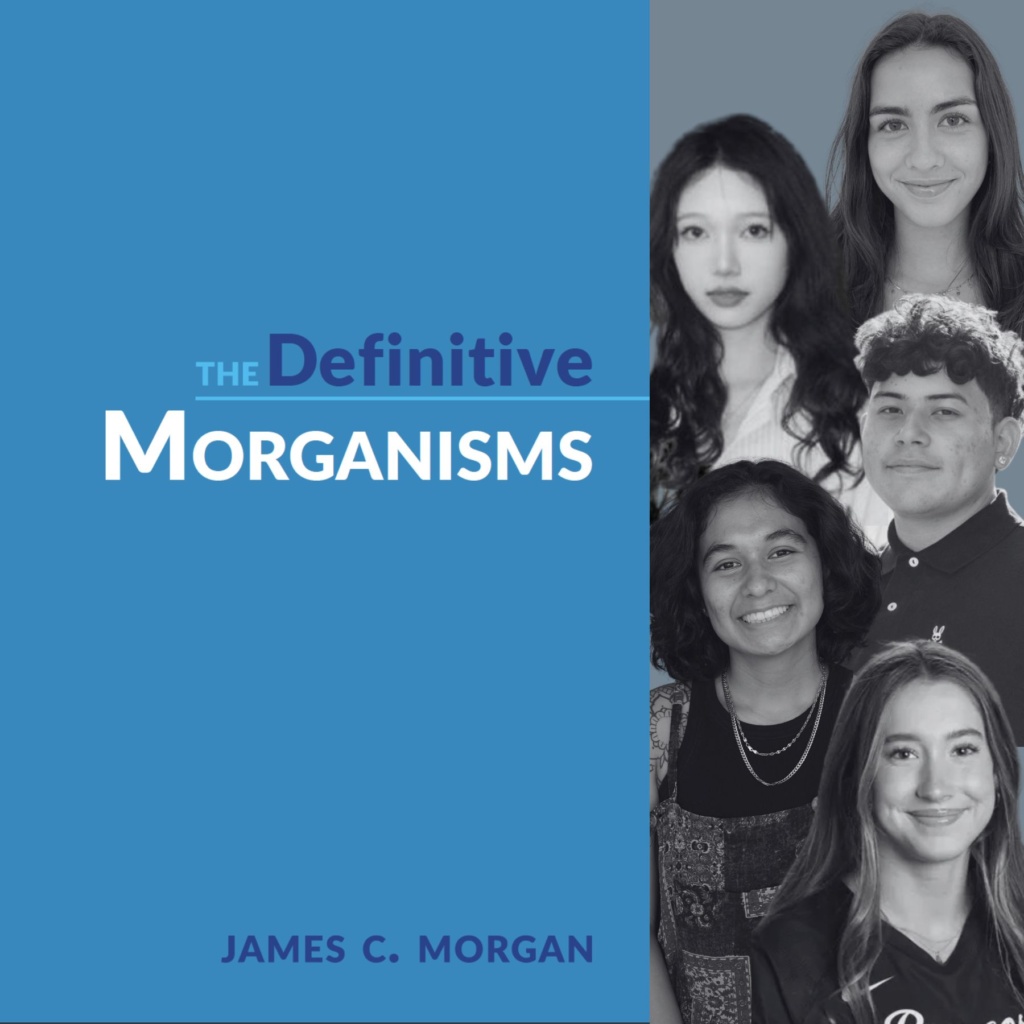
Recently, a group of Miller Center interns explored the book, The Definitive Morganisms, by Jim Morgan, former CEO of Applied Materials and one of Miller Center’s strongest supporters. Through Jim’s collection of practical leadership insights, students discussed and reflected on management, accountability, culture, communication, and leadership.
What struck me most was how the students connected with different Morganisms and used those lessons to shape their own leadership principles. Leadership often gets framed as a future milestone—something we grow into after years of experience or once we hold a formal title. But reading the students’ reflections reminded me that leadership is usually built through smaller, quieter habits. It begins with the values and practices we choose long before anyone calls us a leader.
Take sophomore Paloma Helms, a Political Science major, who examined leadership traits in the book, including the importance of setting a personal vision, mission, and strategy. Inspired by strong role models in her own life, she wrote a simple leadership principle for herself: show up and try your best. At first glance, it sounds straightforward. But leadership often is. Consistency matters. Reliability matters. Teams notice the people who show up with effort and commitment day after day. Leadership rarely starts with grand gestures. More often, it begins with choosing to engage fully.
Other students focused on a different dimension of leadership, making sure every voice has room to contribute. Junior Mandy Xue, a Business Analytics major, selected a Morganism centered on the idea that real collaboration happens when people feel safe enough to share ideas openly. Reflecting on classroom projects and internships, she observed that stronger outcomes often emerge when teams welcome different perspectives.
The leadership habit that Mandy now tries to practice is deceptively simple: pause and invite quieter people into the conversation by asking, “What do you think?” That lesson resonates deeply. In our work with global social entrepreneurs, we regularly bring together leaders from different countries, cultures, and communication styles. Some process ideas internally, some prefer to listen before speaking, and some may need more space before sharing their perspectives. Yet some of the most innovative ideas emerge from people who are not always the loudest voices in the room. Leadership is not simply about speaking. It is also about creating space for others to be heard.
Similarly, junior Grace Flanagan reflected on Morgan’s ideas around culture and immediately connected them to her experience on the Bronco Women’s Volleyball team. She described how talent alone does not create success. Team dynamics, shared values, and the right leadership structure matter just as much.
As she balances her Studio Arts studies with sports responsibilities, she focuses on elevating team culture by leading by example. She noted something many leaders take much longer to learn—people follow standards that leaders are willing to hold for themselves first. Culture is not built through mission statements. It is built through repeated actions, behaviors, and expectations. Whether in a sports team, startup, or nonprofit organization, people watch what leaders do more than what they say.
Several students also reflected on respect and communication. Nathan Loza, a sophomore Business Analytics major, believes that healthy teams are built on mutual trust and accountability. His personal leadership tip is one that many managers practice every day: be transparent and responsive. Clear communication and follow-through help create trust within teams. Respect is often communicated through everyday interactions and the consistency with which people show up for one another.
Ainhoa Ugarte, a junior Communication major, selected Morgan’s idea that competence alone is not sufficient. Technical skills matter, but communication, curiosity, and emotional intelligence shape how teams function.
Her personal leadership lesson is one that many experienced leaders would endorse: communication and curiosity can take you far. She emphasized listening carefully, asking thoughtful questions, and understanding the full scope of what others are trying to convey. This may be one of the most transferable lessons of all. Leadership is often less about having the right answers and more about creating the conditions for better questions. At Miller Center, student experiential learning has always been about more than skill-building. Working alongside social entrepreneurs gives students the opportunity to navigate real-world challenges while developing self-awareness and perspective. Jim Morgan’s Applied Wisdom principles help give our students a language for leadership. And they are taking these principles into their classrooms, teams, and future careers. Leadership is not waiting for these students someday. They are already practicing it.
____________
Pictured top to bottom:
Ainhoa Ugarte ‘27
Mandy Xue ‘27
Nathan Loza ‘28
Paloma Helms ‘28
Grace Flanagan ‘27