When we first began our research, we assumed that being a woman entrepreneur in East Africa would make it harder to access financing. What we found surprised us. In many places, such as Rwanda and Kenya, women are more likely than men to receive grants or small business loans. Governments and investors are starting to see women’s economic power not just as a social goal, but as a smart development policy.
What Our Field Work Revealed
During our summer research with Inkomoko, we saw what these policies look like in real life — how women entrepreneurs, especially those living as refugees, are pushing the boundaries of self-reliance. Their stories highlighted that empowerment doesn’t come only from access to funding, but also from the confidence to build something lasting out of uncertainty.
Angelique’s Story: Building a Business From $150 and a Vision
The story of Angelique, a Congolese refugee in Rwanda’s Kigeme refugee camp, captures this perfectly. With only $150 when she first arrived, she started a small grocery shop to feed her family. After joining the African Entrepreneur Collective’s (now Inkomoko’s) training and loan program, she expanded her business, hired staff, and even opened a second shop in another camp. Her success not only changed her life, but it also challenged assumptions about what refugees, especially refugee women, are capable of.
Refugee Women as an Untapped Market
Stories like Angelique’s have inspired Inkomoko staff, like Natacha Murekezi, to advocate for more inclusive financial systems that recognize refugee entrepreneurs as credible and investable. Women across markets, especially refugee entrepreneurs, represent an untapped, commercially viable market for many financial institutions. This emphasizes how their economic success can reshape policy and perceptions across Rwanda. Seeing this dynamic up close helped us understand that economic inclusion is not charity, but rather innovative development. The women we met and interviewed weren’t asking for help; they were asking for opportunity. And when given the chance, primarily through Inkomoko, they proved how powerful self-reliance can be.
The Impact of Gendered Responsibilities on Economic Power
Through our research, it became clear that while female entrepreneurs in Rwanda and Kenya do not generally perceive their gender as a barrier to accessing finance, there are nuanced challenges tied to societal roles and family dynamics that influence how they use financial resources. A significant insight that shaped our analysis is that women often describe feeling stronger pressure than men to use their loan money for household needs. As a result, they may end up investing less in their businesses, leading to smaller profit increases than men. This highlights a subtle yet critical distinction: women’s economic power, especially in these regions, is often closely intertwined with their responsibilities to their families and husbands, which can affect how their entrepreneurial potential translates into business growth.
Household Dynamics Shape Business Outcomes
The government has made substantial efforts to empower women economically through targeted grants and financing opportunities, and it has undoubtedly opened doors that were historically closed. These policies reflect a broader recognition that women’s economic participation can drive development and social stability. Yet this empowerment sometimes exists within a complex household dynamic in which men may leverage their wives’ access to finance for purposes other than business expansion. In some cases, husbands or male family members may take control of loans obtained by women entrepreneurs and redirect funds to non-business expenses, thereby diluting the potential impact on women’s ventures. This misuse not only undermines the woman’s agency but also perpetuates unequal power relations within the household.
Women’s Autonomy Over Capital
The economic empowerment of women is not just about providing funds but also about ensuring that women have control over their resources and the autonomy to make strategic business decisions. This is where organizations like Inkomoko play a vital role, not only by offering financing, but also by providing training and mentorship that strengthen women’s confidence and financial literacy, enabling them to safeguard their businesses against external pressures.
Trending Toward Inclusive Financial Systems
Our experience showed that while gender may not be an explicit barrier to accessing finance, the intersection of gender roles, household expectations, and financial control shapes the realities women entrepreneurs navigate. Empowerment efforts must therefore consider these socio-cultural factors to create truly inclusive financial systems that support women’s long-term economic success and independence.
____________
Photos
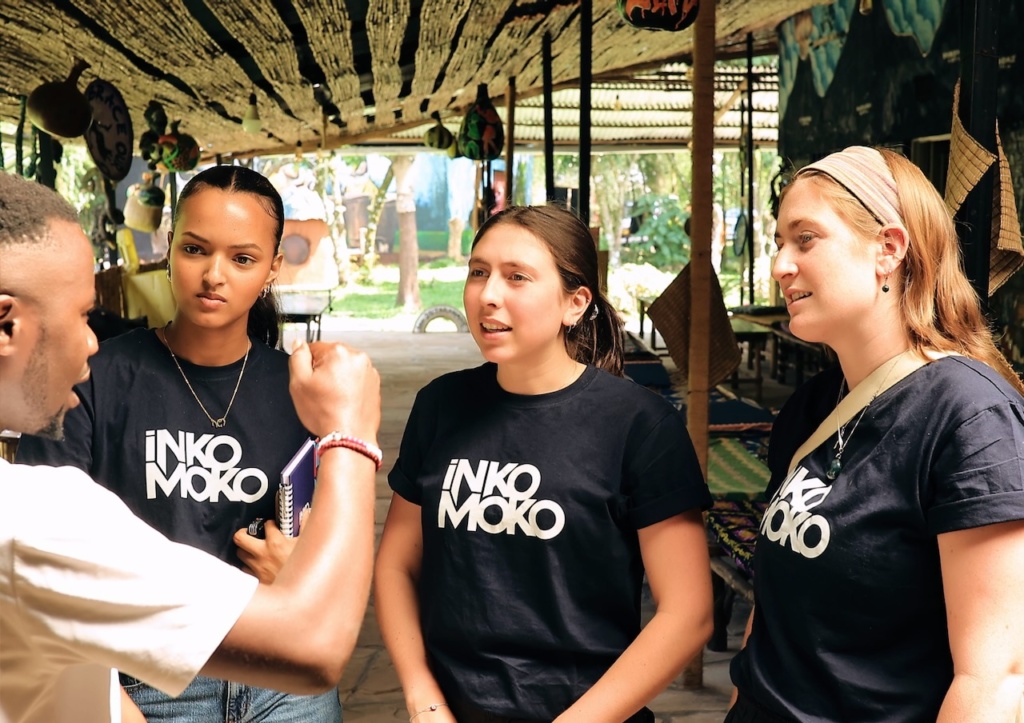
- Miller Center Lewis Family Fellows Saron Weldemariam, Isabelle Pink, and Julia Routh (left to right) with Inkomoko client
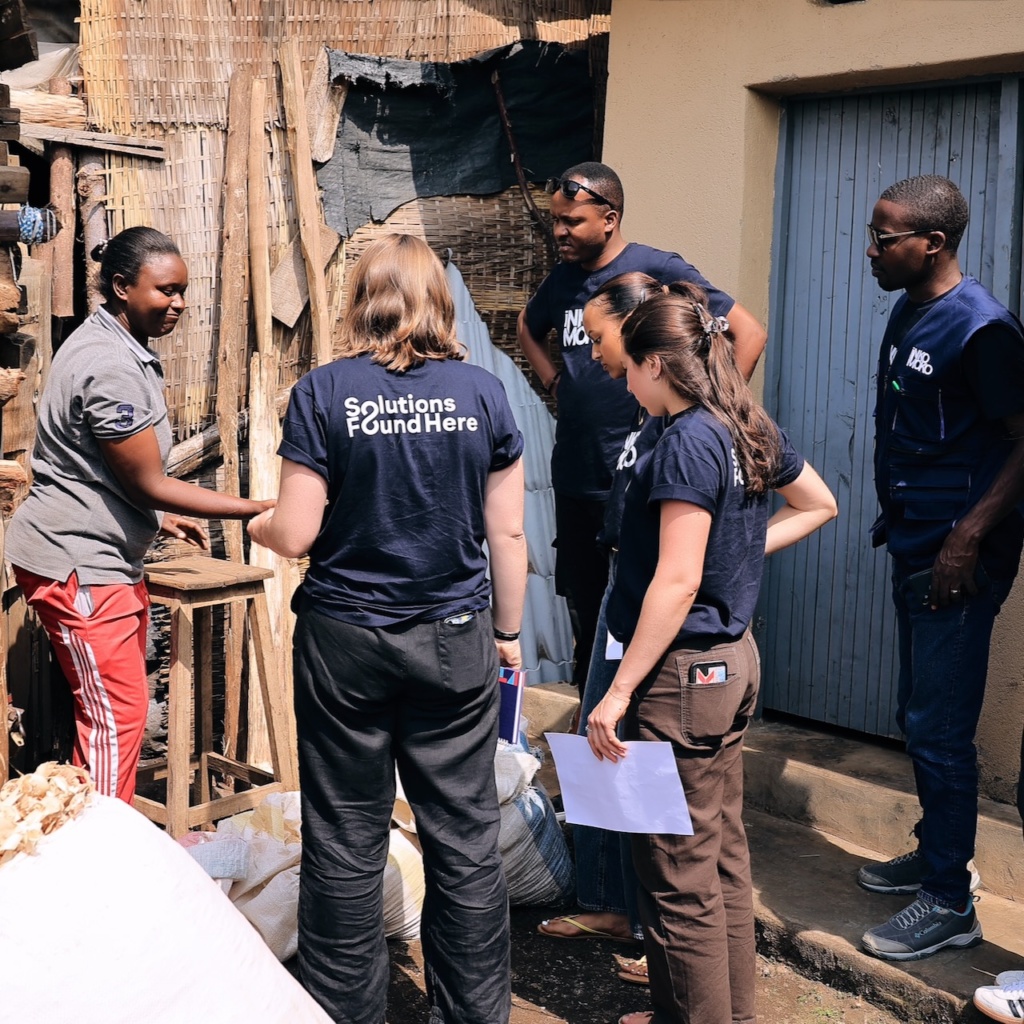
- Visiting an Inkomoko client in Rwanda
Work Cited
- Evaluating the impact of loans, grants, and training on small businesses in Uganda | IPA, 2016. Accessed 21 Oct. 2025.
- Women Refugee Entrepreneurs Are Pushing for Self-Reliance in Rwanda | The Global Compact on Refugees, UNHCR, 2021. Accessed 21 Oct. 2025.
