Linda Keegan, Miller Center Executive Fellow and head Leadership Coach, joined Miller Center in 2019 as a mentor and quickly realized what we were missing — leadership coaching for social entrepreneurs. Linda has over 35 years of experience in leadership and development, working as a Director and Vice President at Apple, Citibank, and Sprint. After developing global management programs at Fortune 500 companies, Linda started her own consulting business and has worked with a variety of clients, including large corporations like Adobe, Cisco, Facebook, and Intuit, as well as start-ups looking to build productive teams.
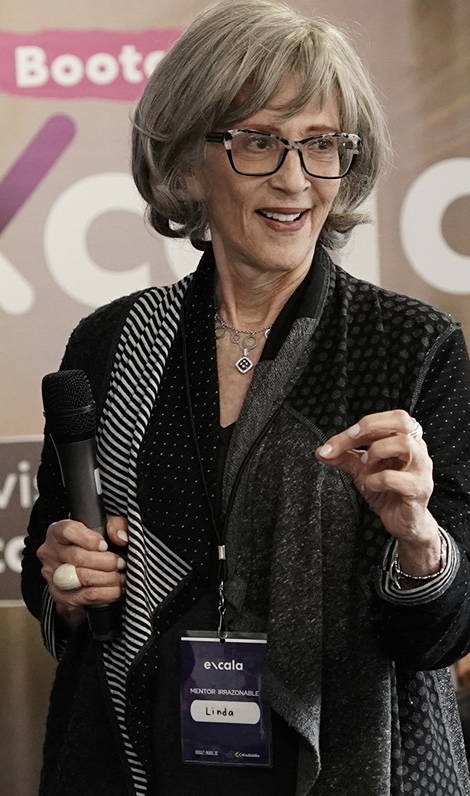
As she got to know our entrepreneurs, Linda identified a gap that wasn’t about mission or business plans but about leadership experience. She saw a pattern of, “I’m a social entrepreneur, and I’m smart. I start a business, it’s successful, I hire five, ten people, I have a team — and then what? Now I’m managing people, and I have to fire my best friend. What am I supposed to do?” To address this problem, Linda and Susan Darin Pohl created our Leadership Coaching Program to meet the needs of our entrepreneurs. For over five years, Linda and a team of Miller Center leadership coaches have provided our network of entrepreneurs with practical, human advice for their everyday management challenges. I had the opportunity to sit down with Linda and discover actionable strategies for hiring, firing, and creating culture. Here’s what I learned.
We Fire too Slow, Hire too Fast
We began by talking about hiring and firing, and Linda pointed out that managers often hire too quickly and fire too slowly, when it should be the other way around. I asked her about the one essential criteria that is often overlooked in the hiring process. In Linda’s words, number one must be emotional intelligence. She explains that “if you hire a smart person, you can train them. But if somebody doesn’t have social-emotional intelligence, forget it.” Simply put, you can teach skill, but you can’t teach emotional intelligence. This is what Linda calls “critical criteria” and is an attribute that cannot be ignored in the hiring process.
Former CEO of Applied Materials and philanthropist, Jim Morgan, shares Linda’s position in his book Applied Wisdom for the Nonprofit Sector: “Hire for purpose and potential first, for skills second.” One of Morgan’s tenets is to take deliberate action, especially when it comes to hiring. He goes on to say that “hiring high-caliber people is always the aim; competence is not sufficient. By high-caliber, I mean people who are resilient, intelligent, and problem solvers.” It’s clear that the character of the person you hire will be the most definitive aspect of how they are as an employee.
To implement this in real time, Linda references a Google X technique of ‘emotional intelligence’ interviews. “Instead of doing the technical interview right away, they do one interview around emotional intelligence, and they don’t even bring the person back if they don’t feel they’ll fit the culture.” Hiring stakes are high, so a person’s emotional intelligence and character must be at the forefront of the hiring decision. Linda’s advice: quit rushing the hiring process!
On the other hand, Linda finds that corporations and social entrepreneurs alike tend to fire too slowly. Her practical advice? Treat an employee’s first three months as a trial period. She said to me, “You should keep an eye on the person for a few months. And not get overwhelmed by making your decision right, you should start looking for red flags in the first three months, and if you see them, be ready to say, ‘I made a mistake.’” As humans, our conflict aversion tends to get in the way of making the right management decision. The risk of firing too slowly is that other team members have to make up for what someone is not doing, which can be a serious threat to culture.
The Key to Culture is Clarity
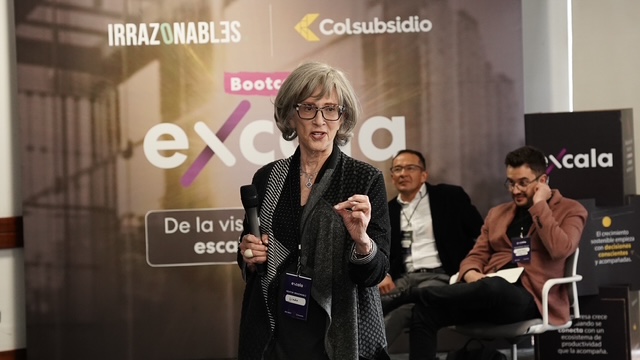
“Culture” is a workplace buzzword that is often thrown around but rarely well-defined and well-understood. Linda explains that “culture is all about clarity. What’s the organization’s vision? Why are we here? What are our goals? What are the different roles? Clarity is so big, and most organizations are all about ambiguity — the opposite of clarity.” As humans, we like to know where we’re going. But a well-defined culture isn’t created overnight. In Applied Wisdom for the Nonprofit Sector, Jim Morgan writes that “you will never change an organization’s culture just by telling employees that the culture needs to change… you must do something, take deliberate action. Make real changes and communicate them — not just once, but repeatedly and consistently.”
Consistent and repeated effort is required to cultivate a clear culture — clear to staff, board members, stakeholders, and customers. The effort required goes beyond speaking about culture. Linda tells me that “it’s more about what you do than what you say as a leader. You’re only as good as what you actually do.” Morgan goes beyond the leader and explains that “it is every team member’s job to ‘walk the talk’ and commit to building a great enterprise.”
Reflections
Through my conversation with Linda and in reading Jim Morgan’s work, I learned that managing an organization well requires a people-centered approach. Linda evokes this quote from Teddy Roosevelt: “Nobody cares how much you know if they don’t know how much you care.” Empathy, curiosity, and humility are such essential qualities of leadership — qualities that social entrepreneurs naturally bring to their work.
But embodying those qualities doesn’t make leadership easy. As entrepreneurs scale their organizations, they face tough decisions, steep learning curves, and moments of real loneliness.
That’s why leadership coaching matters. Our coaches walk alongside entrepreneurs as they hone their skills, build confidence, and grow into the leaders their missions need them to be.
